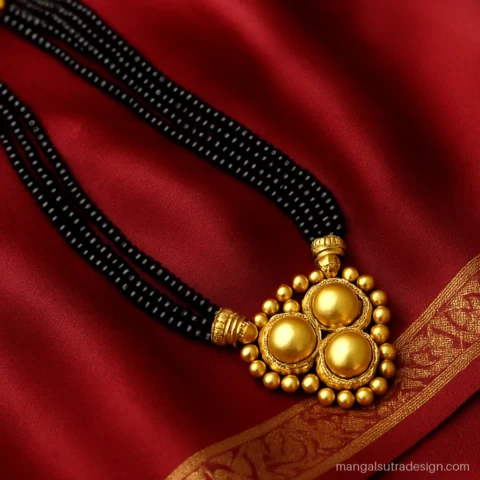
Nepali Mangalsutra and Pahadi Designs
- 12 designs
- Regional designs
- Updated Oct 2026
A nepali mangalsutra looks very different from the black bead designs of the plains. It is usually made of pote, many strands of tiny red or green glass beads, joined by a long gold tilhari. This gallery shows Nepali tilhari styles along with pahadi, Garhwali and Kumaoni mangalsutra designs, plus Rajasthani, Bengali and Gujarati pieces.
Customs vary between families, villages and communities. Some women wear the pote every day. Others keep it for Teej, weddings and family functions. Use these designs as a starting point and ask elders what your family follows.
For other regional styles, see our Maharashtrian mangalsutra and South Indian mangalsutra pages.
Nepali Mangalsutra Design: Tilhari and Pote
In many Nepali families, the married woman's necklace is made of pote (strands of tiny glass beads) gathered into a gold tilhari, a long cylinder shaped pendant. Red and green pote are both common.
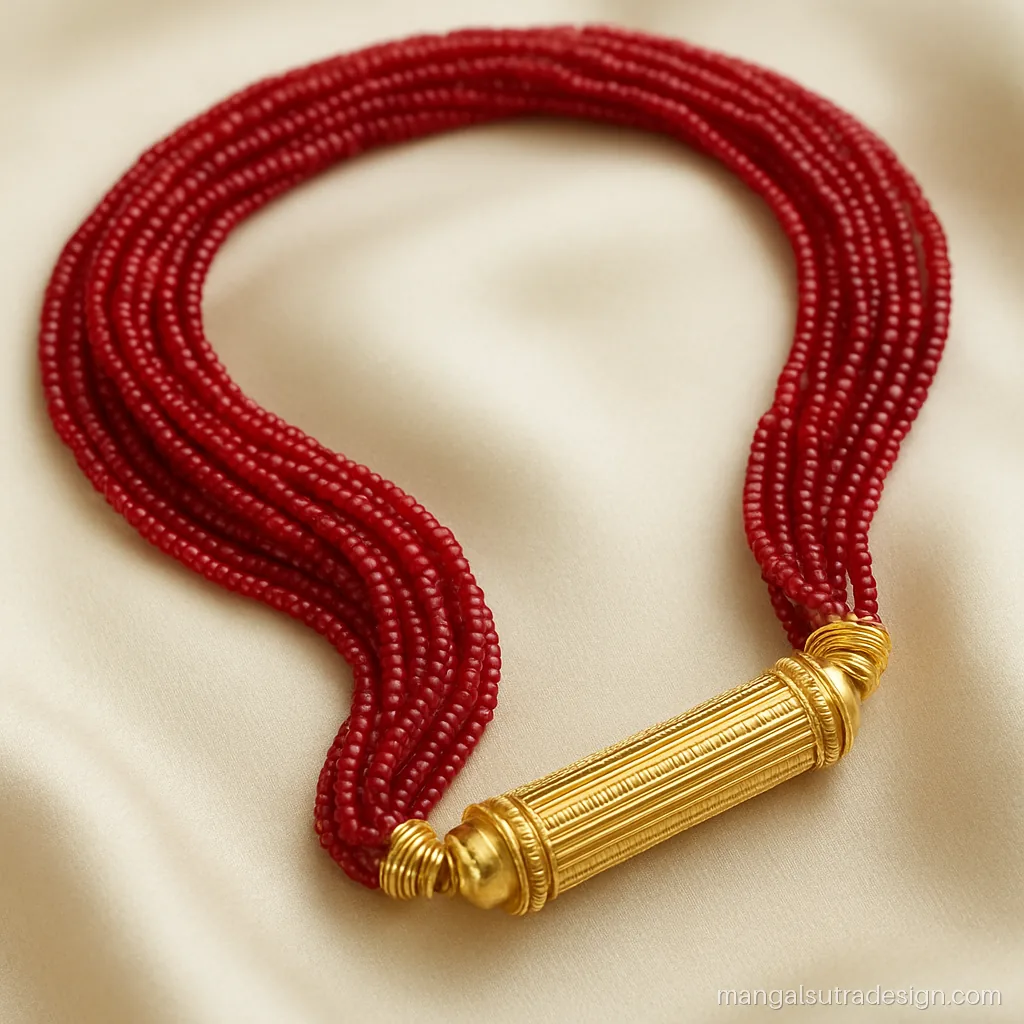
- Weight
- About 12 g gold
- Length
- Long, 28 in
- Wear
- Weddings and Teej
Bright red pote strands meet at a long gold tilhari. A classic red Nepali mangalsutra design for weddings and Teej.
Ask your jeweller: Ask how many pote strands are used and whether the tilhari is hollow or solid gold.
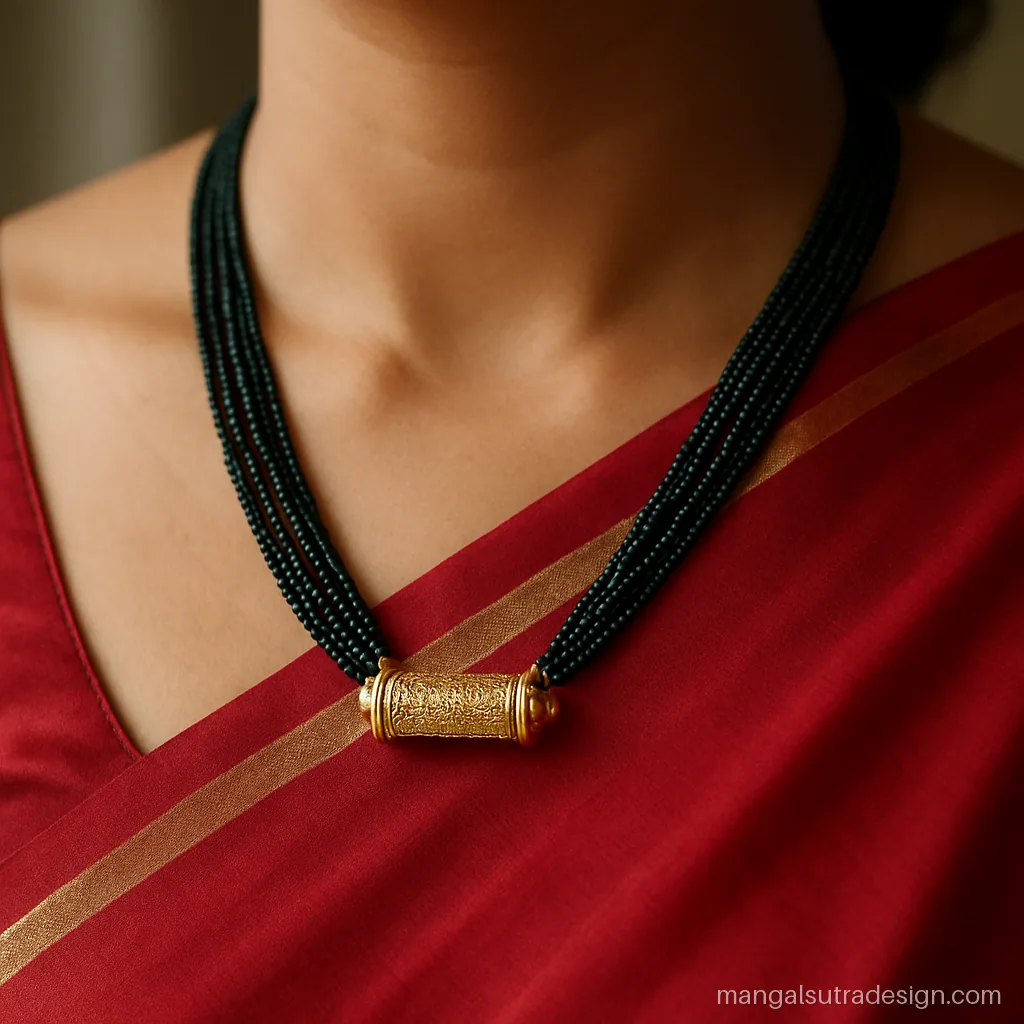
- Weight
- About 14 g gold
- Length
- Long, 30 in
- Wear
- Teej and festivals
Green pote against a red saree is a look many Nepali women love for Teej. The tilhari sits at the centre of the chest.
Ask your jeweller: Check the bead bunch is crimped tightly into the tilhari caps so no strand slips out.
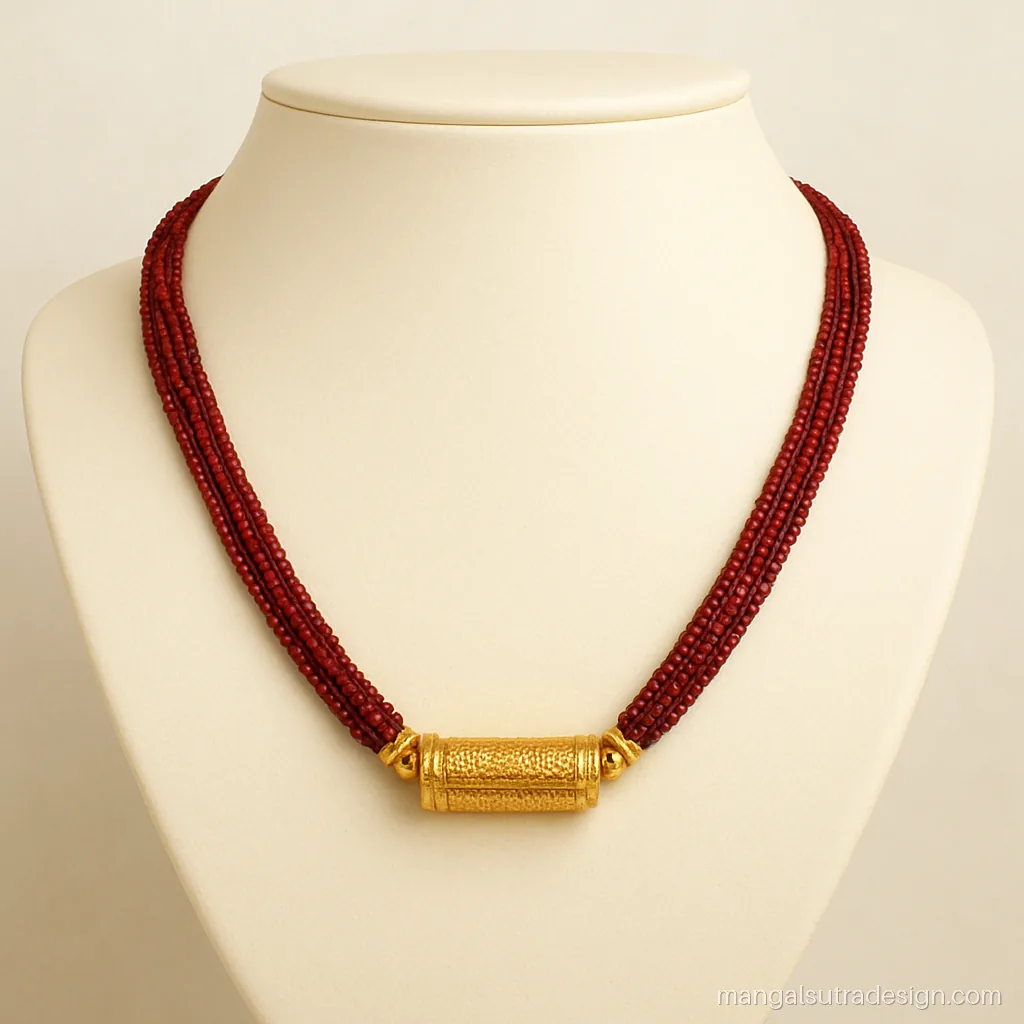
- Weight
- About 4 g gold
- Length
- Short, 18 in
- Wear
- Daily wear
A slim strand of red pote with a small tilhari. Easy to wear to work or college every day.
Ask your jeweller: Mini tilhari can dent. Ask for slightly thicker gold sheet and a hook clasp.
Pahadi Mangalsutra and Garhwali Designs
In many hill families of Uttarakhand and Himachal, the pahadi mangalsutra is long and generous with gold. Garhwali mangalsutra designs often pair black beads with large gold beads and a round pendant.
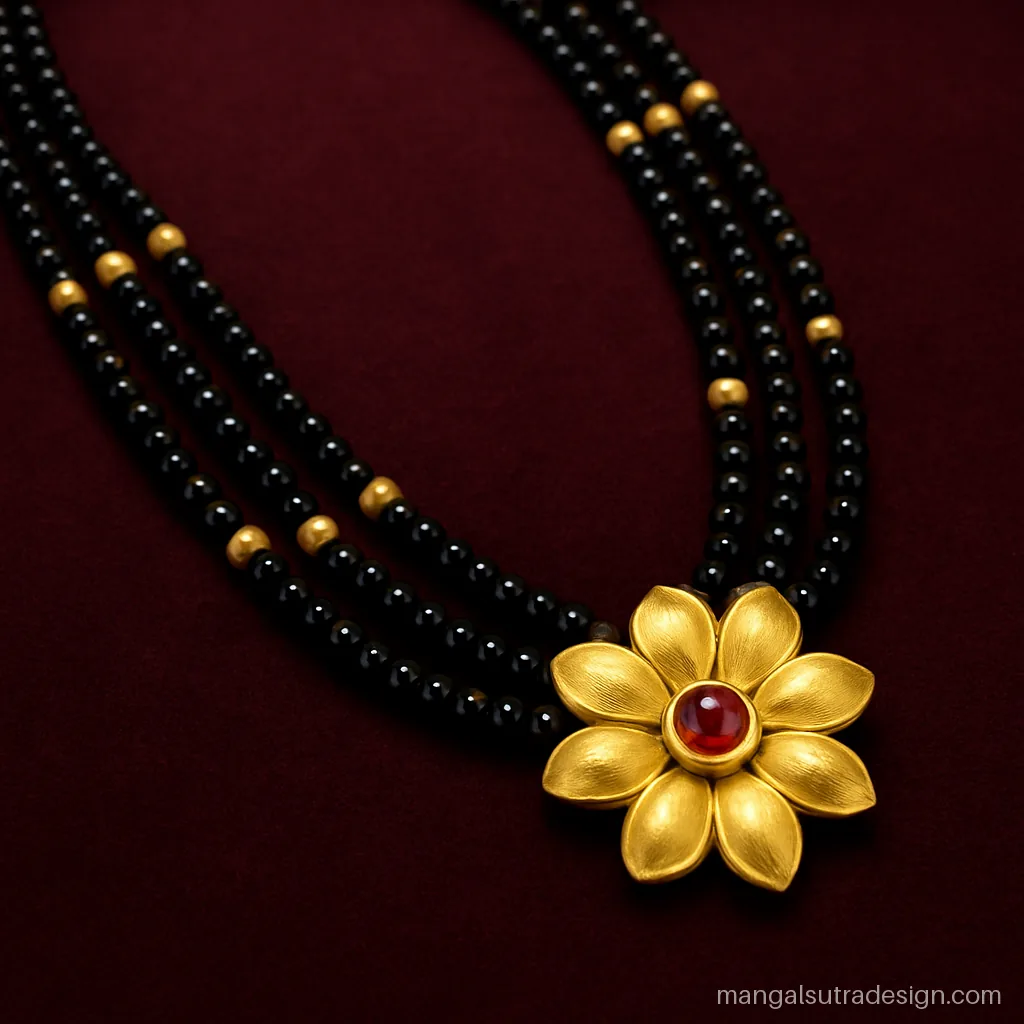
- Weight
- About 18 g
- Length
- Long, 30 in
- Wear
- Weddings
A wide gold flower pendant on long black bead strands. A bold pahadi mangalsutra design for weddings.
Ask your jeweller: Large flower pendants are often hollow. Ask the jeweller to show the back and confirm the weight.
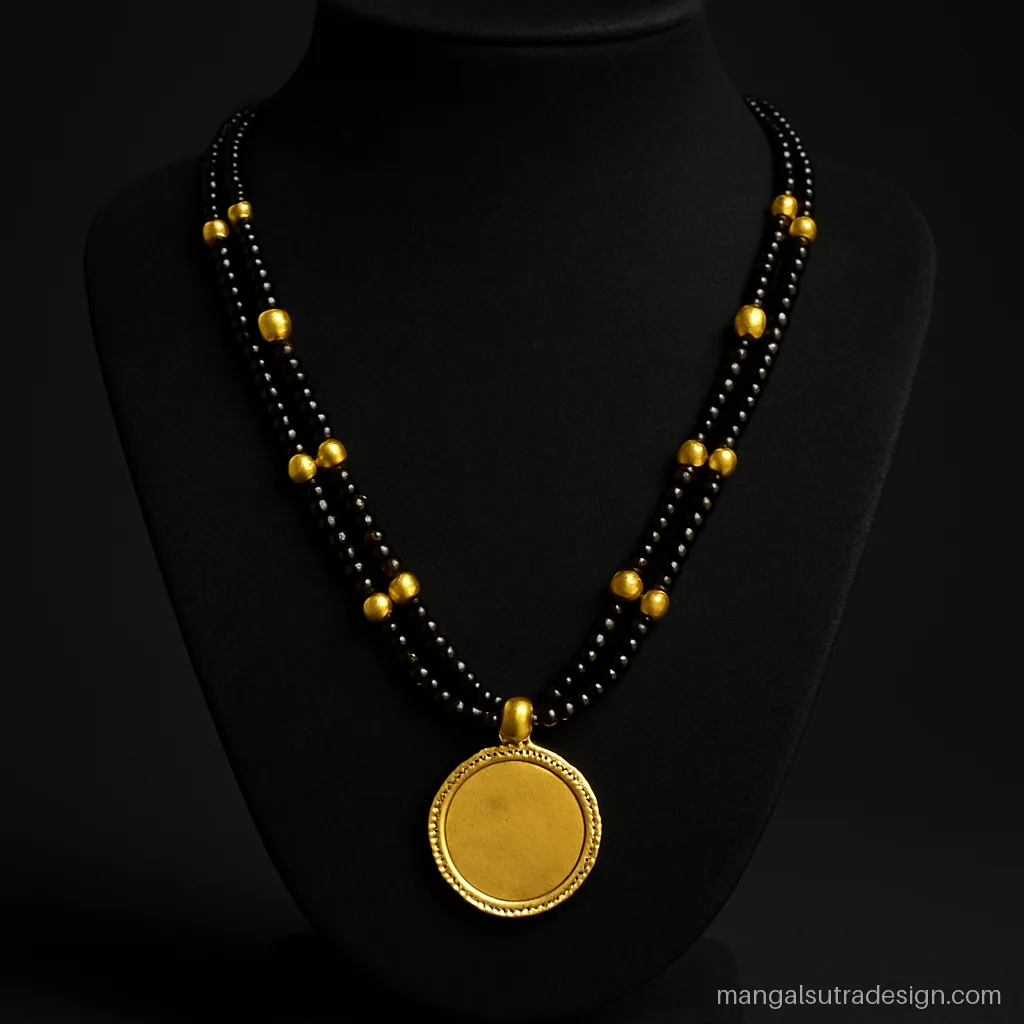
- Weight
- About 15 g
- Length
- Long, 26 in
- Wear
- Festivals and functions
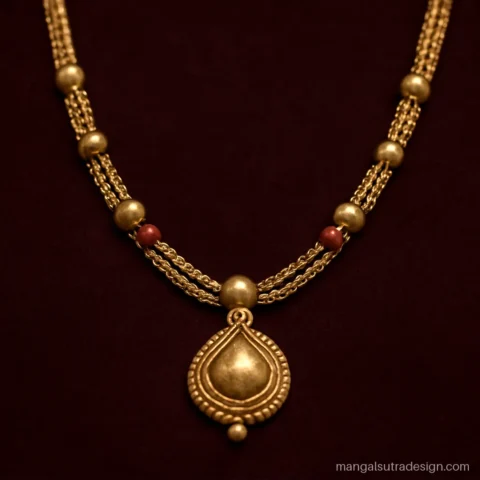
Big round gold beads and a coin with a stamped border. A strong, simple look in many Garhwali homes.
Ask your jeweller: Ask for each gold bead to be weighed separately on the bill so you know the true gold weight.
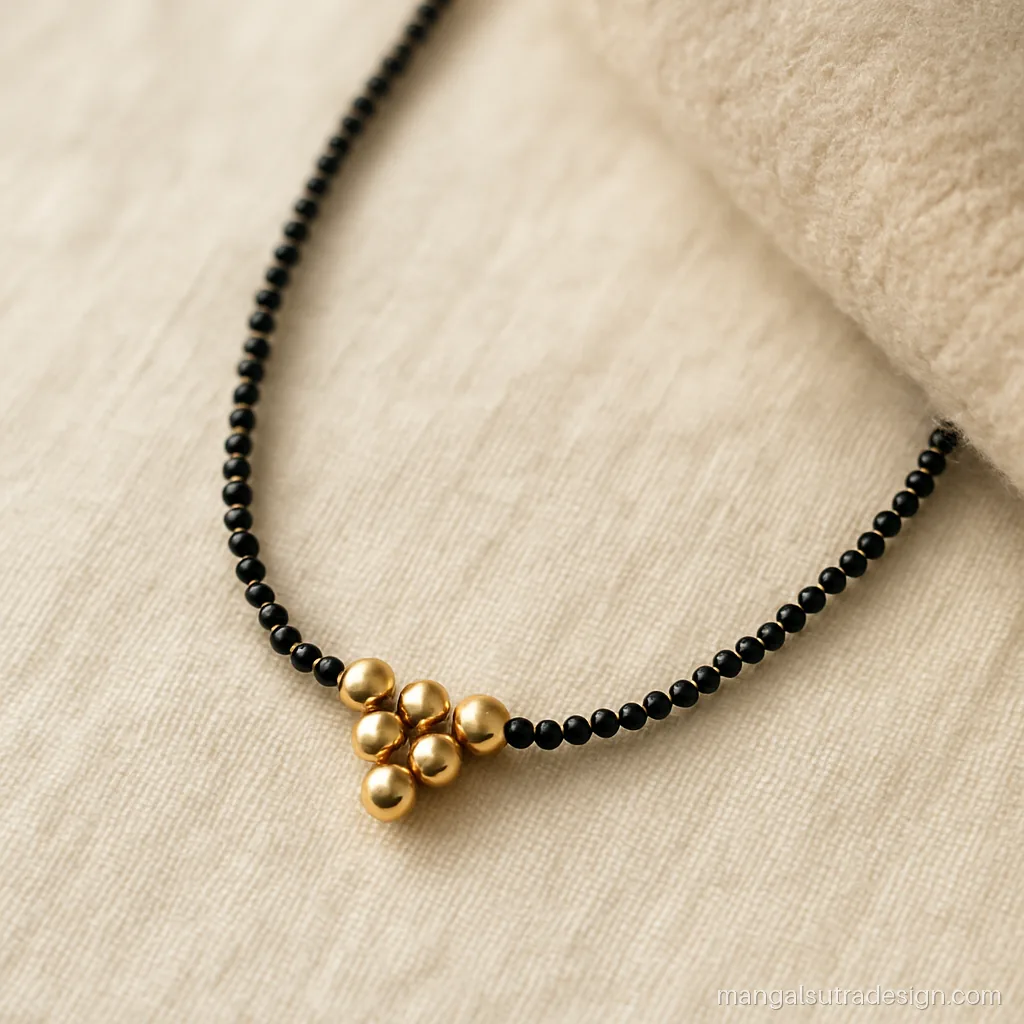
- Weight
- About 6 g
- Length
- Short, 18 in
- Wear
- Daily wear
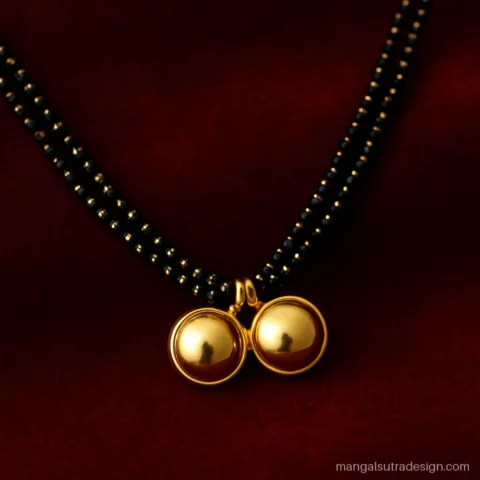
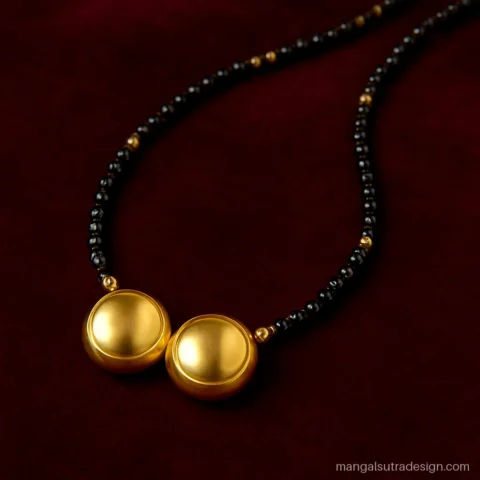
A cluster of gold beads at the front, black beads behind. A lighter pahadi mangalsutra for daily wear.
Ask your jeweller: Ask for a gold chain section at the back so the black beads do not wear out quickly.
Kumaoni Mangalsutra Design
Many Kumaoni families call the mangalsutra the charyo. It is usually made of black beads with gold beads and sometimes a gold pendant, and lengths vary by family.
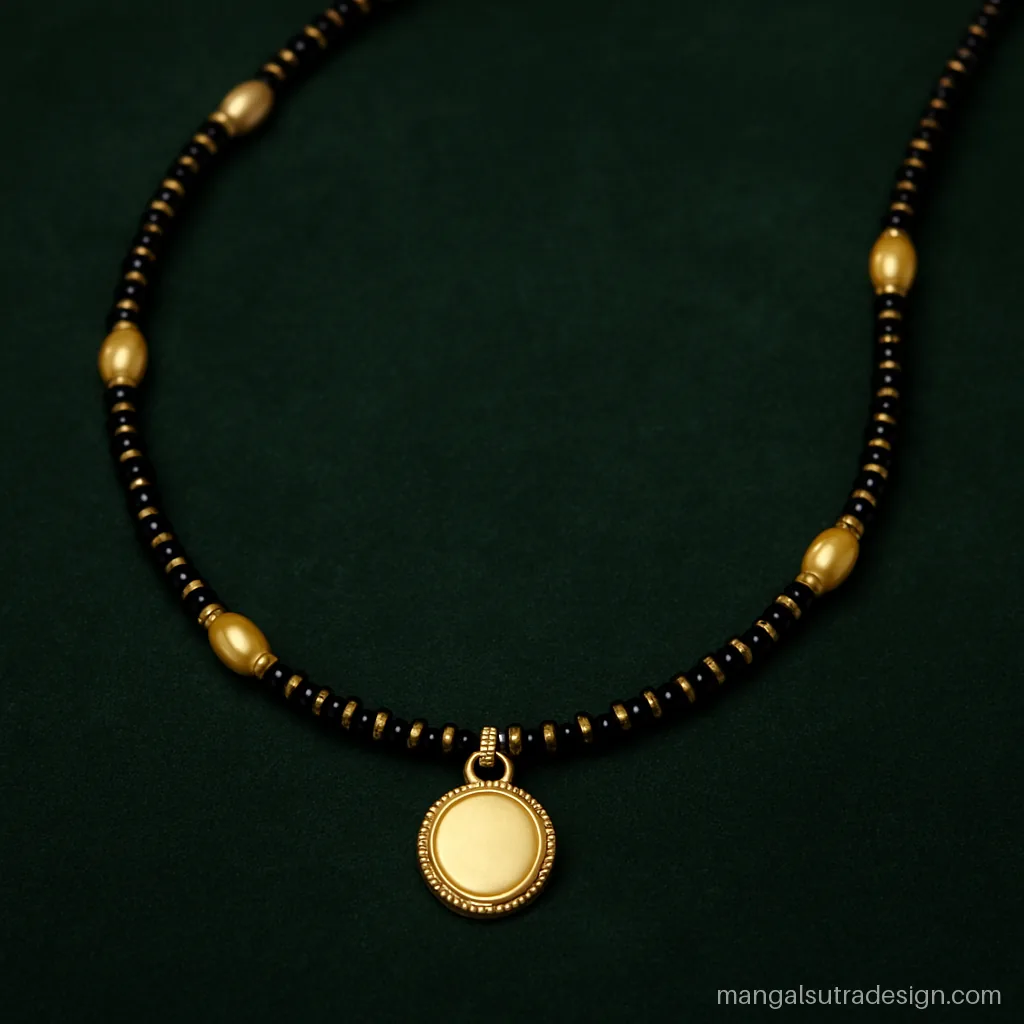
- Weight
- About 14 g
- Length
- Long, 30 in
- Wear
- Weddings and pooja
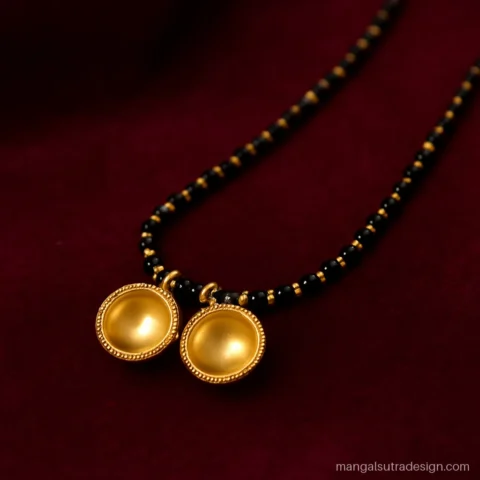
A long charyo with gold beads spaced evenly along it. This is the traditional Kumaoni mangalsutra many families keep.
Ask your jeweller: Ask for the gold beads to be solid at the front where they get pressed most.
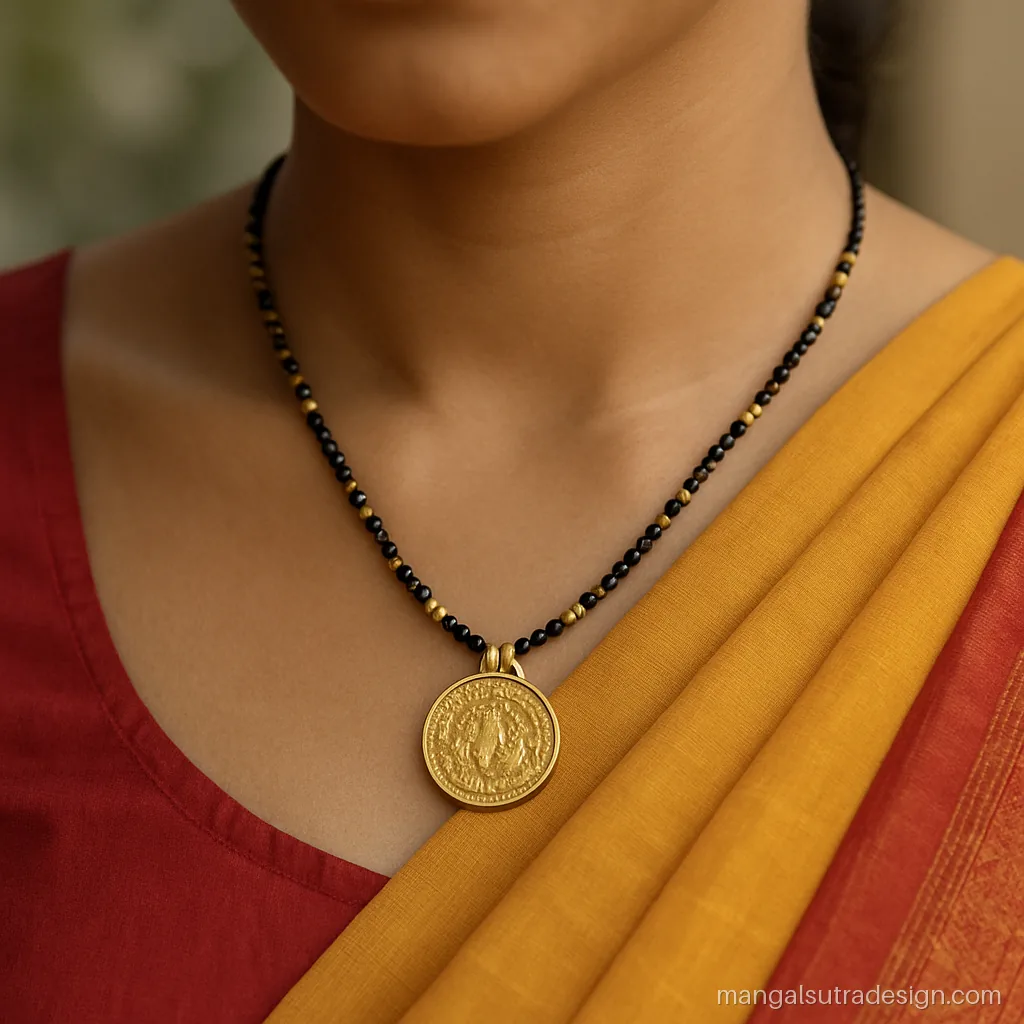
- Weight
- About 12 g
- Length
- Long, 28 in
- Wear
- Family functions
A charyo with a coin pendant worn with the yellow and red pichhaura. A look seen at many Kumaoni functions.
Ask your jeweller: Try it with the pichhaura over your shoulder. The pendant should show below the dupatta edge.
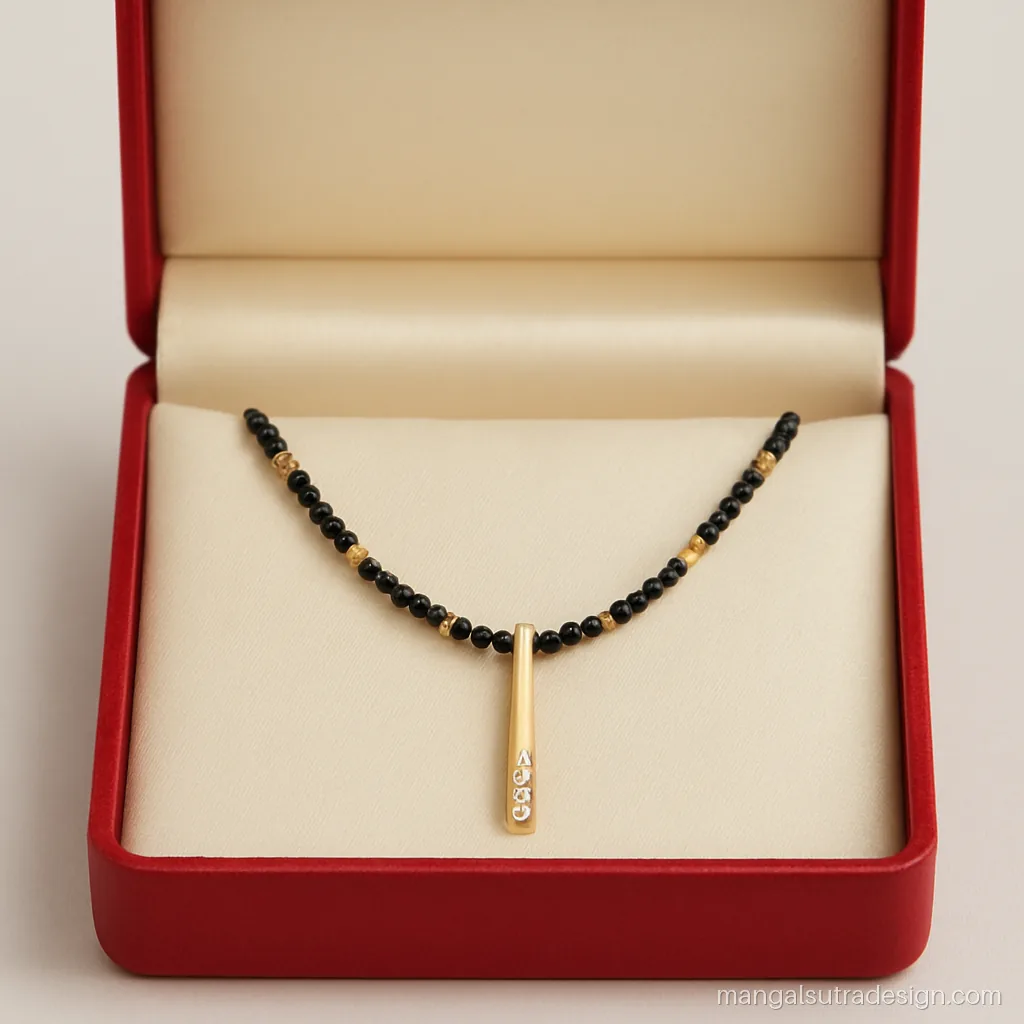
- Weight
- About 5 g
- Length
- Short, 18 in
- Wear
- Office wear
A short charyo with a slim diamond bar in place of the coin. A new Kumaoni mangalsutra for office days.
Ask your jeweller: For the diamond bar ask for 18k gold and a certificate showing total carat weight.
Rajasthani, Bengali and Gujarati Mangalsutra
Other regions bring their own touches. Rajasthani mangalsutra designs often use kundan and meenakari. Bengali and Gujarati families have their own customs, and styles keep changing.
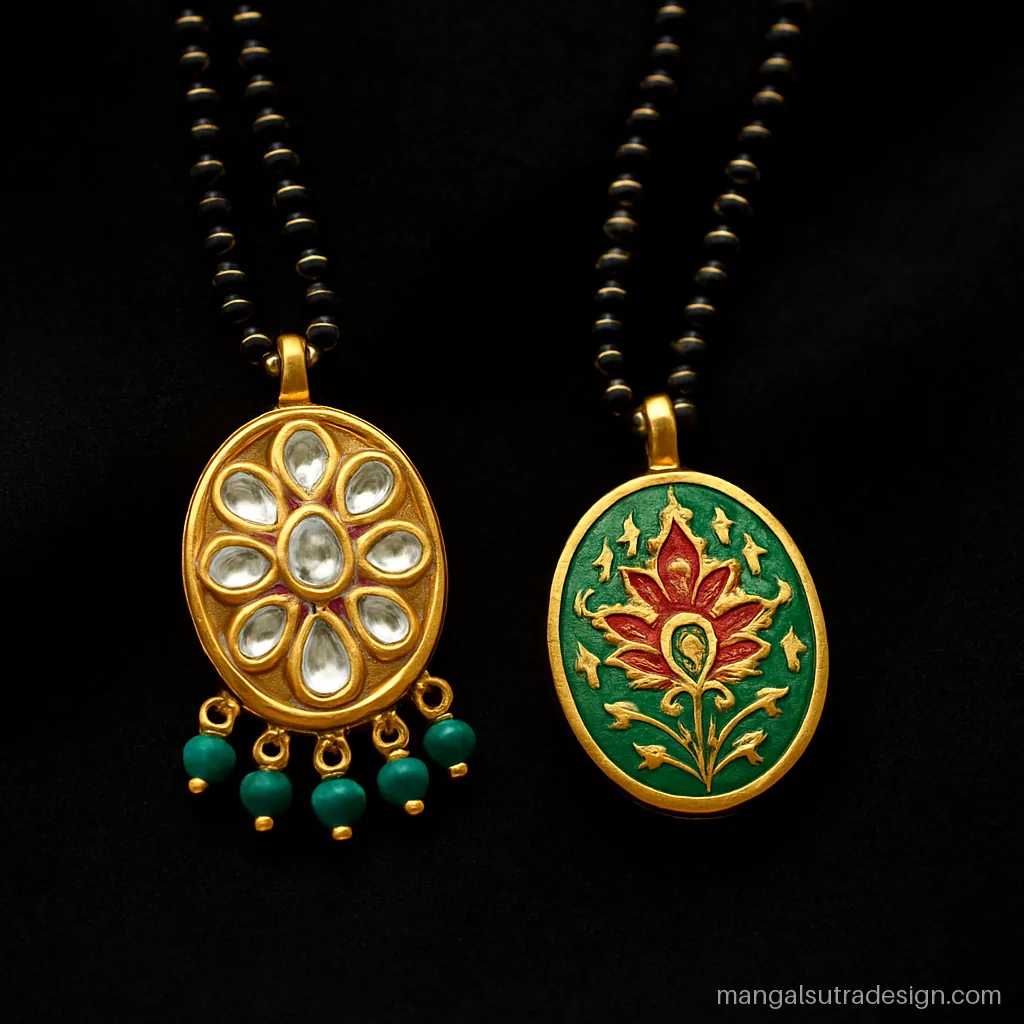
- Weight
- About 16 g
- Length
- Long, 26 in
- Wear
- Weddings and festivals
A kundan front with green meenakari on the back. Rajasthani work at its best, on a double black bead strand.
Ask your jeweller: Ask to see the meenakari back. Good enamel is smooth with no chips or bubbles.
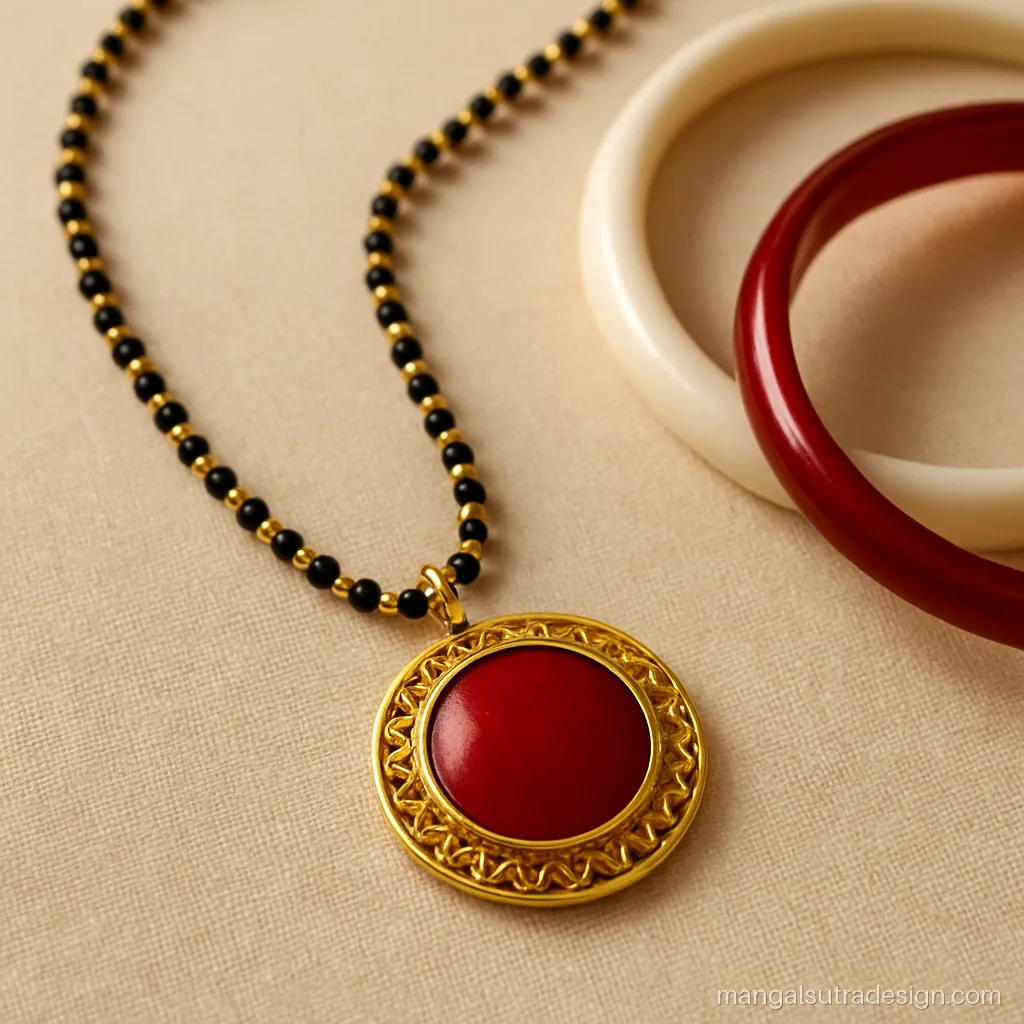
- Weight
- About 8 g
- Length
- Medium, 22 in
- Wear
- Durga Puja and functions
A red and gold pendant that matches shakha and pola bangles. A Bengali mangalsutra design many newer brides like.
Ask your jeweller: Red enamel can chip. Ask the jeweller about repair and keep it apart from bangles.
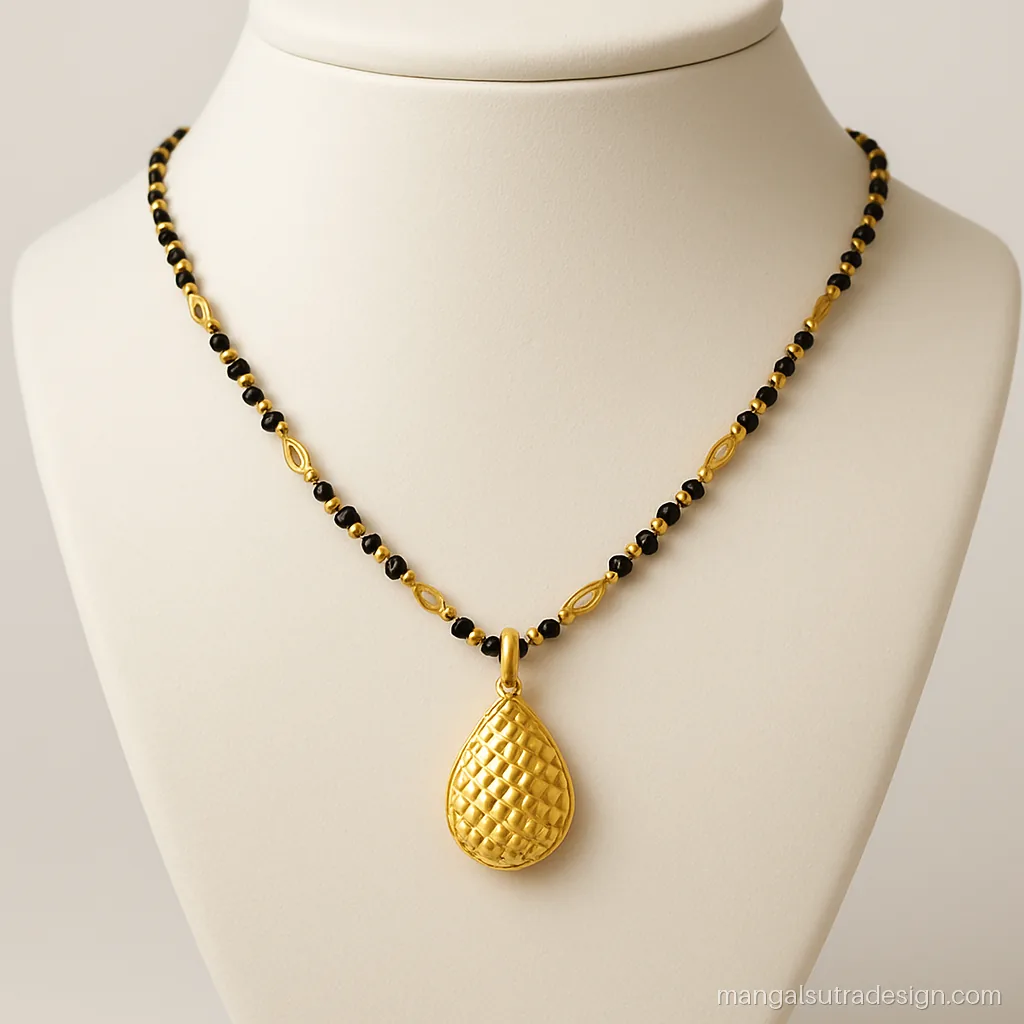
- Weight
- About 10 g
- Length
- Medium, 22 in
- Wear
- Navratri and functions
A diamond cut gold pendant with lots of sparkle from the gold alone. Many Gujarati families like this bright finish.
Ask your jeweller: Diamond cut means cut gold, not stones. Confirm this on the bill and check the 22k HUID.
Regional Mangalsutra at a Glance
| Region | Common name or look | Typical length |
|---|---|---|
| Nepal and Nepali families in India | Pote with gold tilhari | 26 to 30 in |
| Garhwal and Himachal | Long black beads with large gold beads | 24 to 30 in |
| Kumaon | Charyo of black and gold beads | 24 to 30 in |
| Rajasthan | Kundan or meenakari pendant | 22 to 26 in |
| Bengal | Newer custom, often red and gold | 18 to 22 in |
| Gujarat | Gold pendant on black beads or chain | 18 to 24 in |
A bihari mangalsutra is usually black beads with a gold pendant, and many Bihari families give equal weight to sindoor and other wedding customs. In Kashmiri Pandit families, the dejhoor, a pair of gold ear pendants, plays a similar role to the mangalsutra. Traditions differ even within one state.
Buying and Care Tips
- Weight and price: The bill is gold weight x that day's rate for the karat, plus making charges, plus 3 percent GST. Glass pote add to total weight but not to gold value, so ask for gold weight separately.
- Hallmark: Check the BIS mark, karat and 6 character HUID on the tilhari or pendant.
- Pote care: Keep glass beads away from hard floors and perfume. Store the strands flat so they do not tangle.
- Kundan and enamel: Keep them dry. Water can get behind kundan foil.
For more light options, browse our traditional mangalsutra designs.
Mangalsutra questions answered
What is a pote Nepali mangalsutra?
Pote are strands of tiny glass beads, usually red or green. In a pote Nepali mangalsutra, many strands are gathered into a gold tilhari pendant. Many Nepali women wear it after marriage, and customs vary by family.
What is the difference between a nepali red mangalsutra and a green one?
Both are common. Red pote are often worn at weddings and Teej, and green pote are also very popular. Many families choose by custom or personal liking.
What does a Kumaoni mangalsutra look like?
Many Kumaoni families call it the charyo. It is usually a black bead strand with gold beads and sometimes a gold pendant. A new Kumaoni mangalsutra may be shorter with a small diamond or bar pendant.
Is a garhwali mangalsutra different from a pahadi mangalsutra?
Garhwali designs are one kind of pahadi mangalsutra. Most hill styles use long black bead strands with large gold beads, but each region and family has its own preferred pendant and length.
Do Bengali women wear a mangalsutra?
Traditionally many Bengali married women wear shakha and pola bangles and sindoor. Many newer brides also wear a mangalsutra, often in red and gold, so a Bengali mangalsutra design is now common at jewellers.
What makes a rajasthani mangalsutra special?
Rajasthani designs often use kundan stones on the front and meenakari enamel on the back. They are usually heavier and suit weddings and festivals.