Traditional Mangalsutra Design: Vati, Temple and Two Strand Styles
- 12 designs
- By style
- Updated Oct 2026
A traditional mangalsutra design follows the old shapes families know well: vati cups, gold coins, temple motifs and a double strand of black beads. Many brides choose one of these for the wedding and keep it for life.
Customs differ by region and family, so there is no single right style. Below are 12 traditional mangalsutra designs with weight, length and a jeweller note for each. For regional pieces, also see Maharashtrian mangalsutra.
Traditional Gold Hindu Mangalsutra Design
These are the shapes many mothers and grandmothers wore: vati cups, round coins and gold bead stations on black beads. A gold Hindu mangalsutra design like this is still the first choice in many families for the wedding day.
- Weight
- About 10 g
- Length
- Medium, 22 in
- Wear
- Wedding day
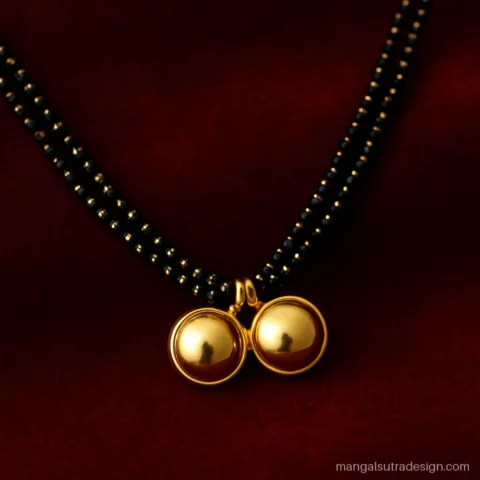
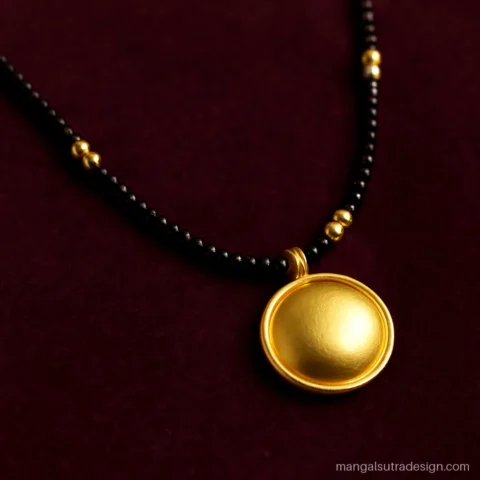
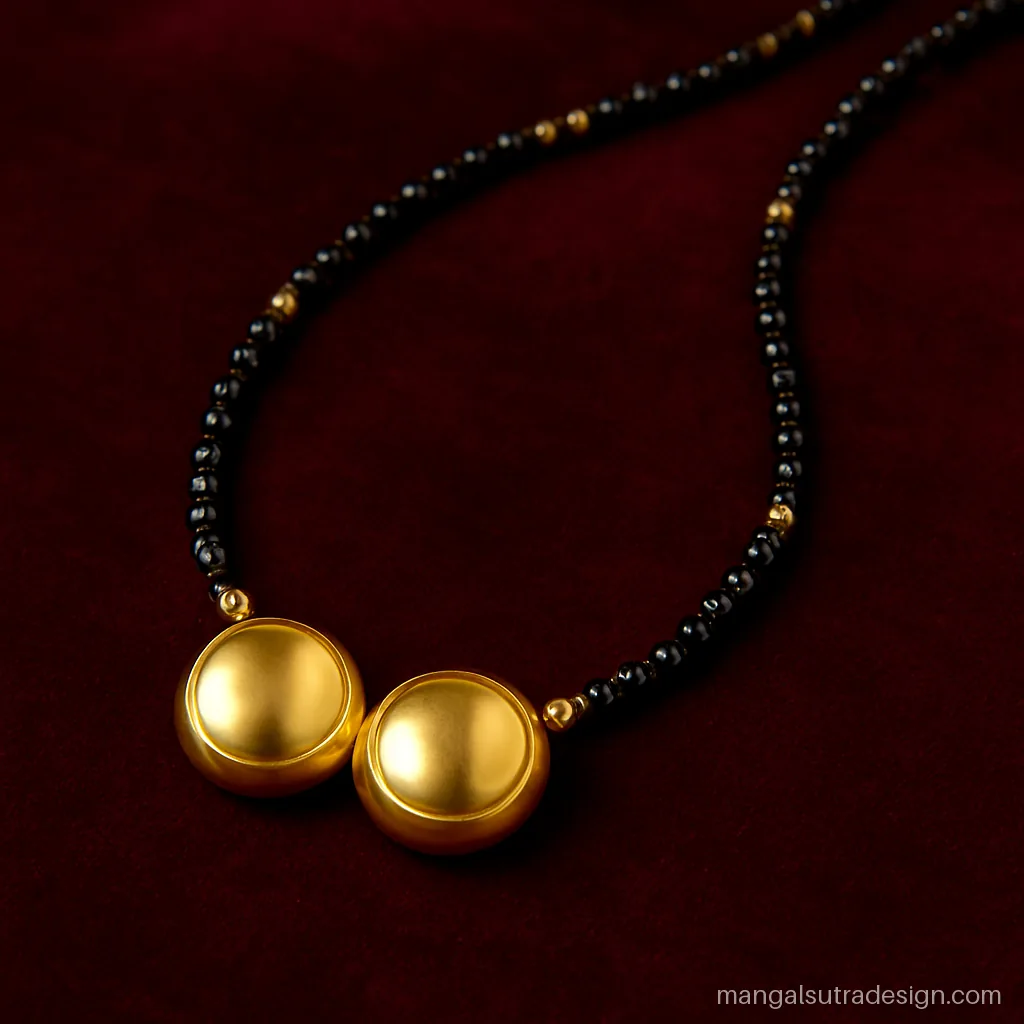
Two plain vati cups on a double strand is the classic Maharashtrian shape. In many families the two cups are said to stand for the two homes joined by marriage.
Ask your jeweller: Ask for solid 22k cups, not hollow, and check the hallmark on the cup back or hook.
- Weight
- About 12 g
- Length
- Long, 24 in
- Wear
- Pujas and festivals
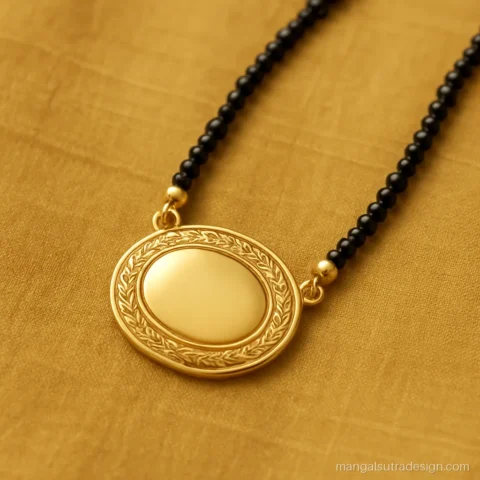
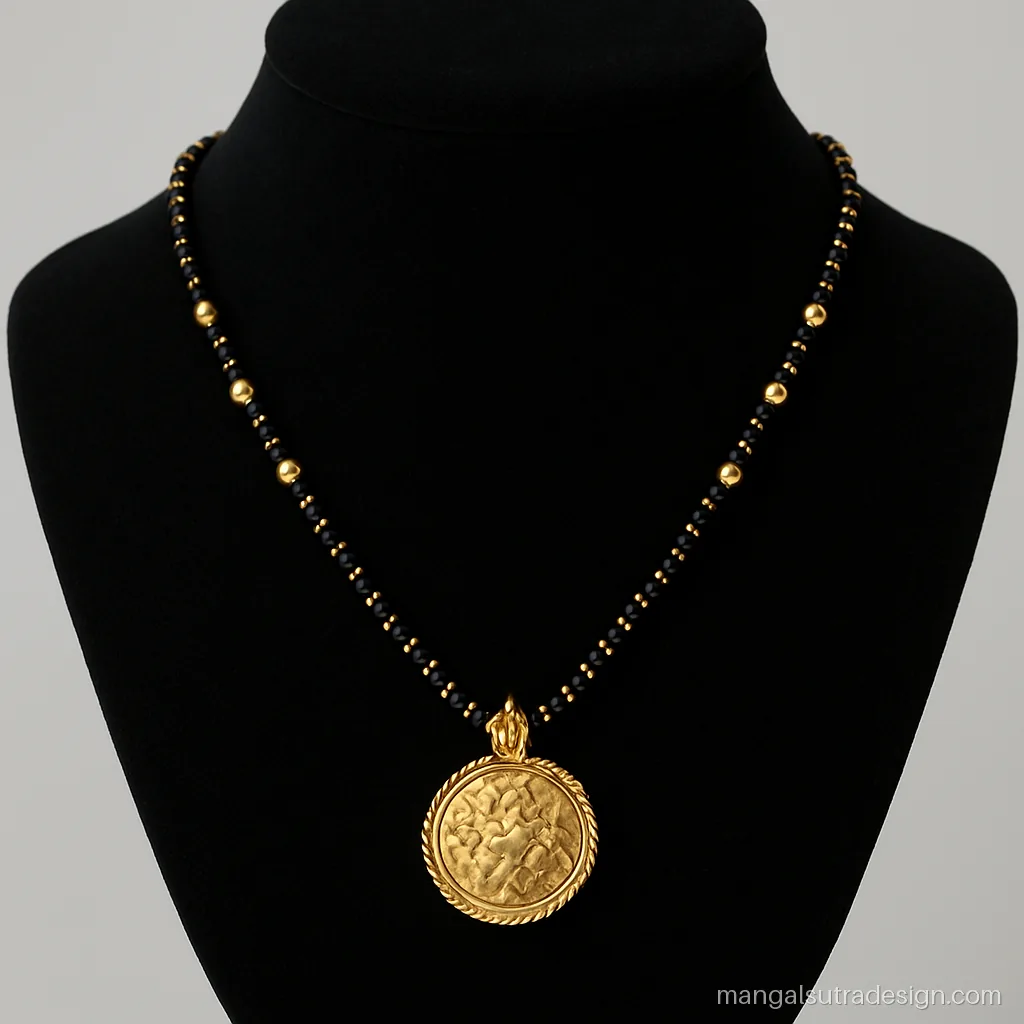
Round gold beads spaced through the black strand, with an engraved round pendant, is a look seen in many Gujarati and North Indian families.
Ask your jeweller: Ask if the gold beads are hollow. Hollow beads keep weight down but need gentle handling.
- Weight
- About 14 g
- Length
- Medium, 22 in
- Wear
- Festivals
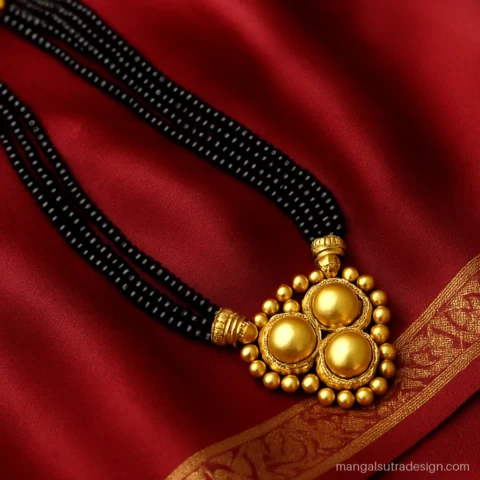
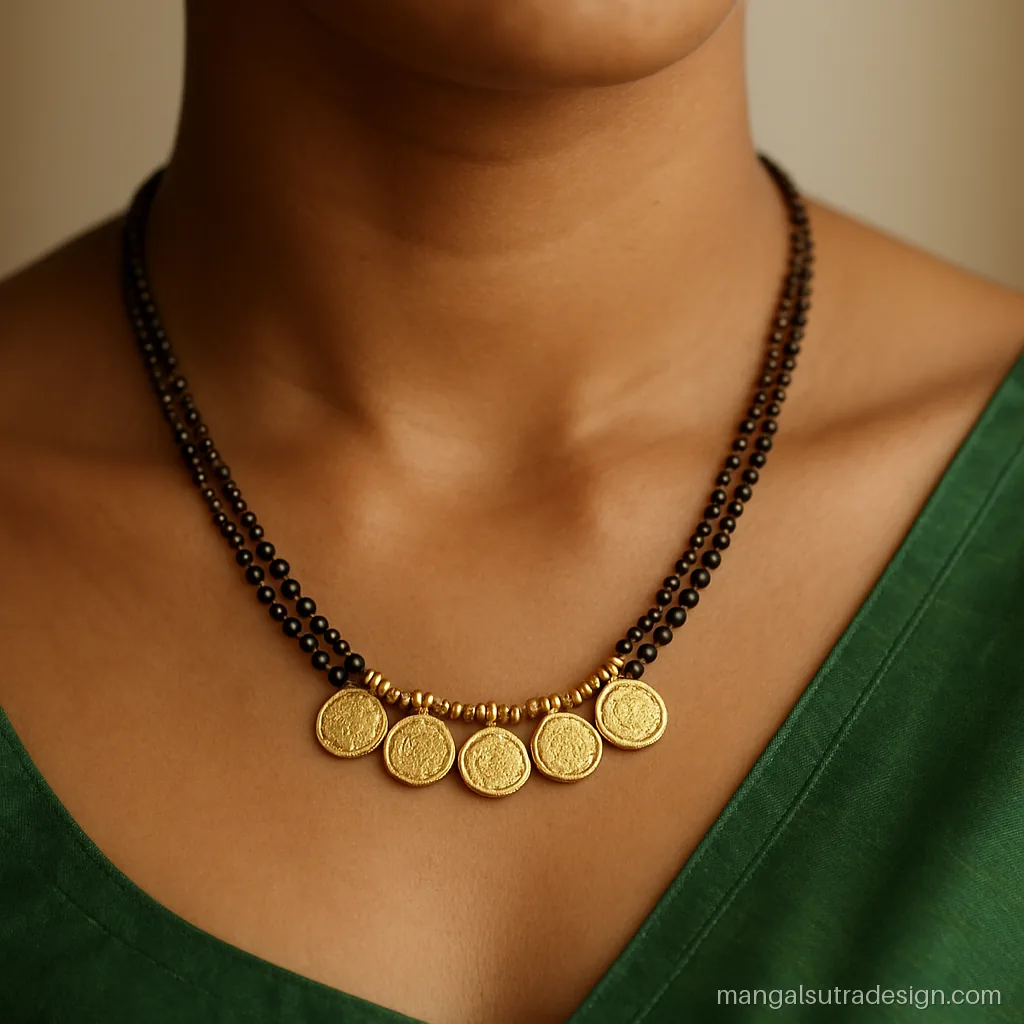
Five small embossed coins at the front give a rich festive look. A good pick when you want tradition without one large pendant.
Ask your jeweller: Check that each coin hangs from its own soldered ring so one loose coin does not drop the rest.
Temple Pendant Traditional Mangalsutra Designs
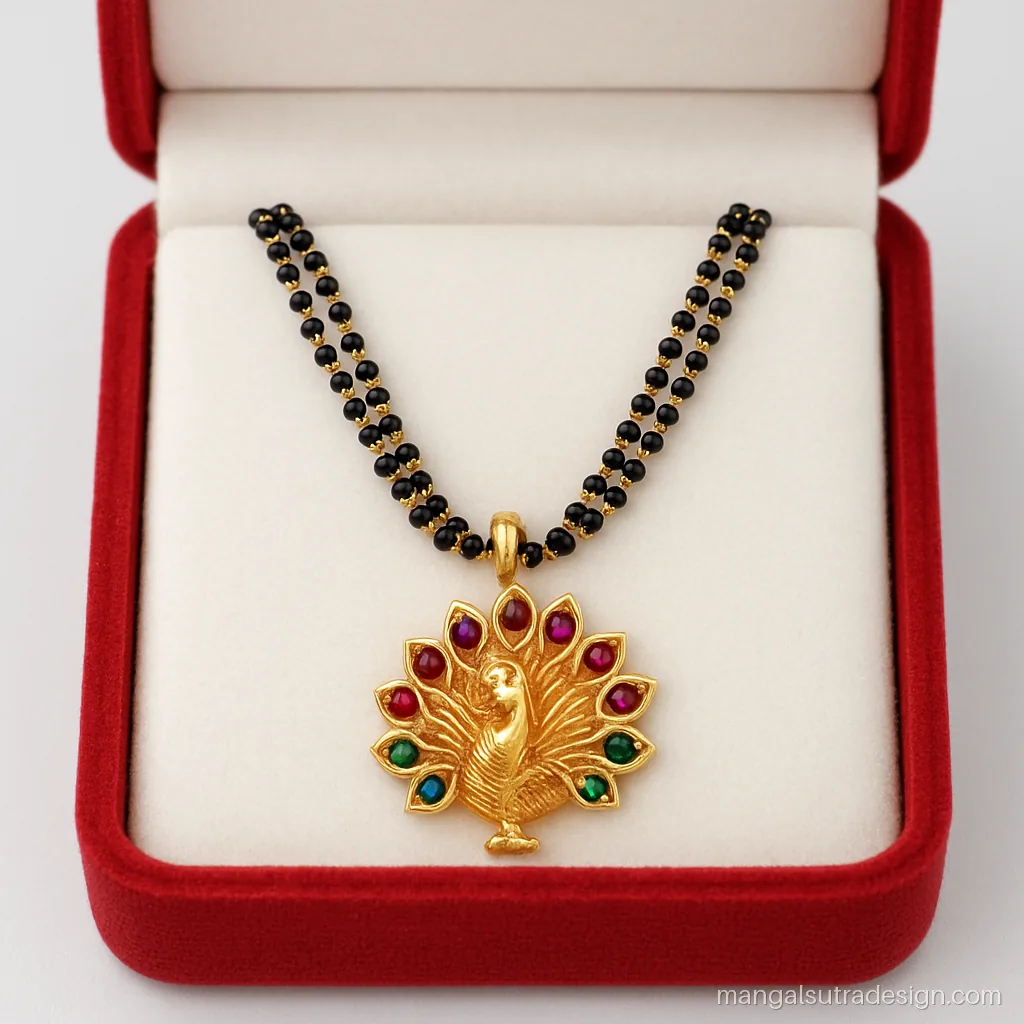
Temple pendants carry motifs from South Indian temple jewellery, such as lotus, peacock and gopuram shapes, often in antique finish. They sit well with silk sarees. For thali styles, see our south Indian mangalsutra page.
- Weight
- About 18 g
- Length
- Long, 24 in
- Wear
- Silk saree days
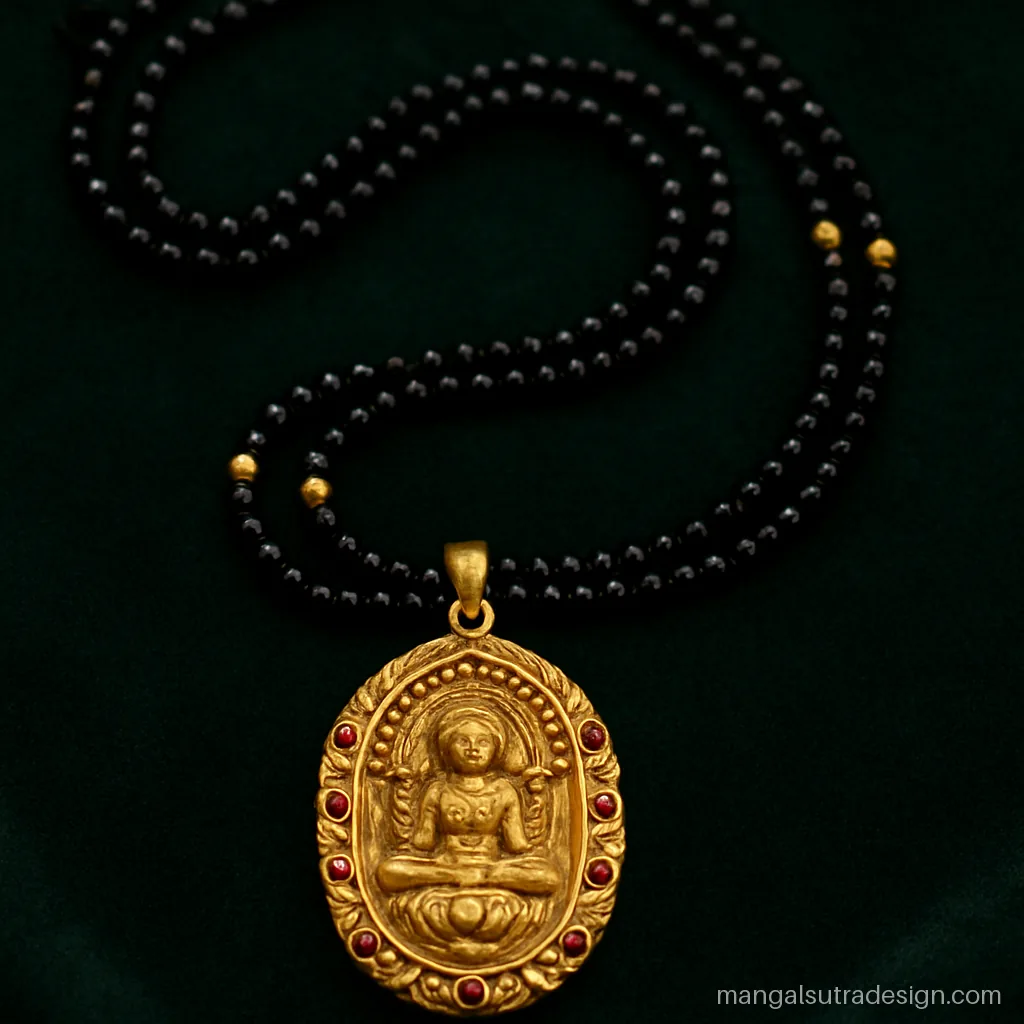
An antique finish temple pendant with a seated goddess figure is a much loved style in many South Indian families. It pairs well with Kanjeevaram silk.
Ask your jeweller: Antique finish is a coating. Ask how to clean it so the dark tone stays on the recesses.
- Weight
- About 15 g
- Length
- Long, 24 in
- Wear
- Festive wear
A peacock with ruby and emerald dots adds colour to a gold and black look. It is a festive piece that also suits Navratri and Diwali outfits.
Ask your jeweller: Ask whether the stones are natural, synthetic or glass, and that they are listed on the bill.
- Weight
- About 16 g
- Length
- Long, 26 in
- Wear
- Weddings
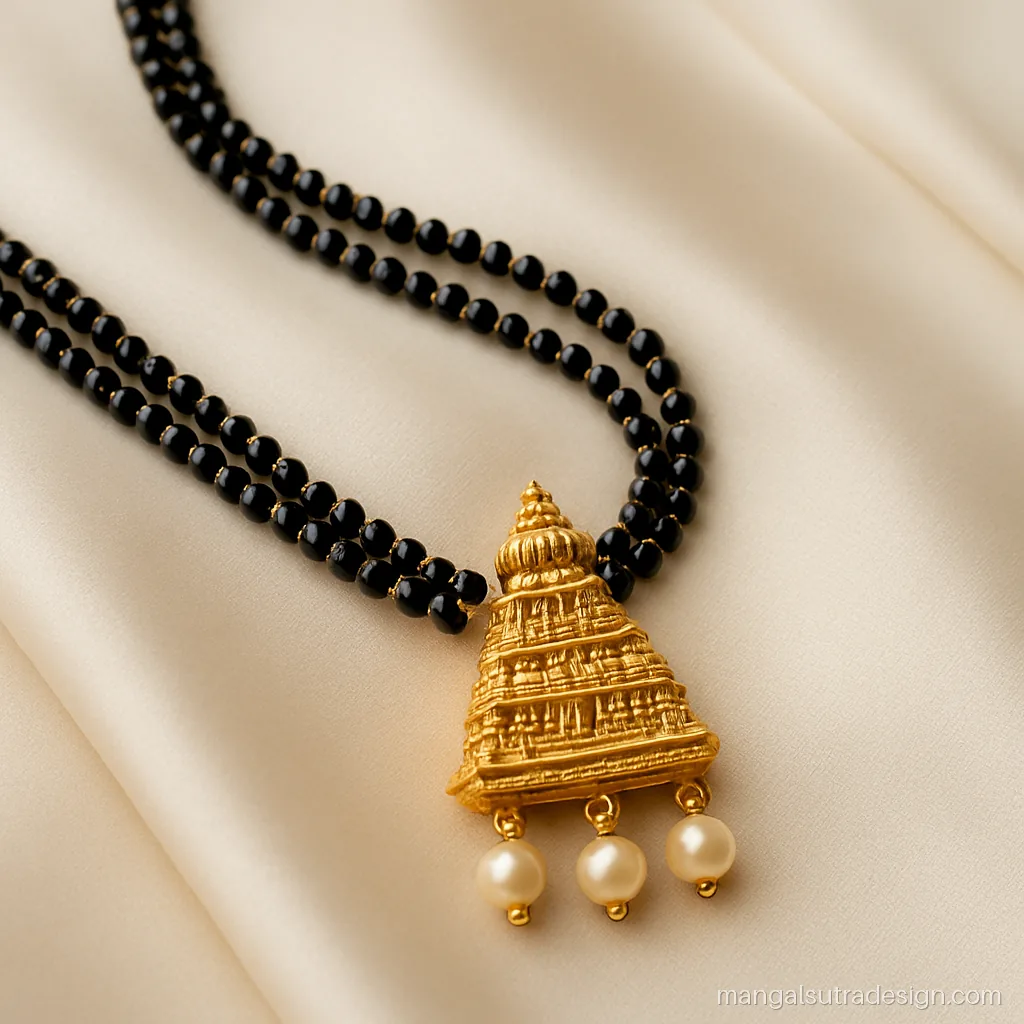
A tower-shaped pendant with pearl drops looks like old temple work. The pearls soften the heavy gold and move as you walk.
Ask your jeweller: Pearl drops hang on fine wire. Ask for gold wire hooks and check they are closed tight.
Classic Two Strand Traditional Gold Mangalsutra
Two strands of black beads joined at one pendant is the most familiar traditional gold mangalsutra shape across western India. Small changes in the pendant make each one feel personal.
- Weight
- About 9 g
- Length
- Medium, 20 in
- Wear
- Wedding and daily
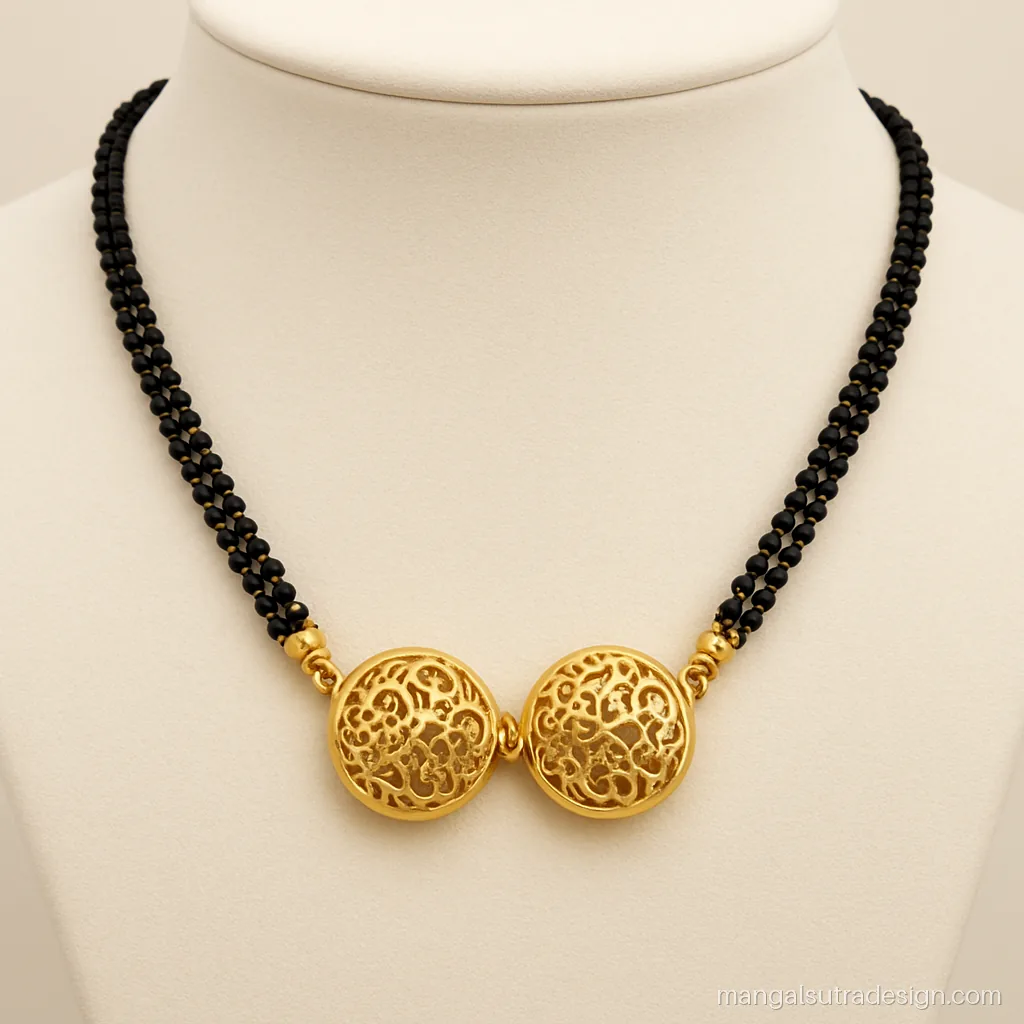
Filigree vati cups look lighter than plain ones and show fine handwork. A good middle path between a plain and a heavy piece.
Ask your jeweller: Filigree catches dirt. Ask if the cups can be cleaned at the shop and how often.
- Weight
- About 11 g
- Length
- Medium, 22 in
- Wear
- Wedding and festivals
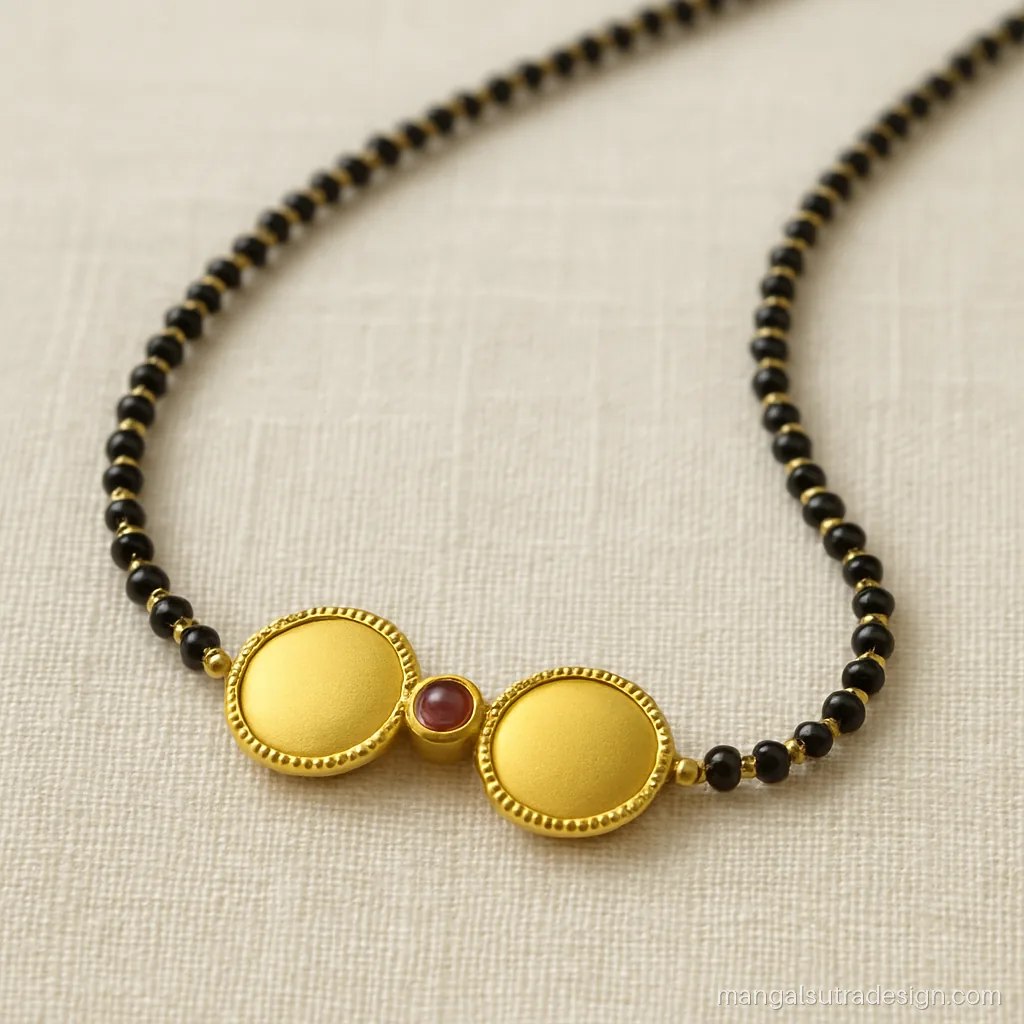
A single ruby between two vati cups is a traditional touch seen in many Maharashtrian pieces. The red adds a little colour to gold and black.
Ask your jeweller: Ask for a closed bezel around the ruby and check the cups sit level.
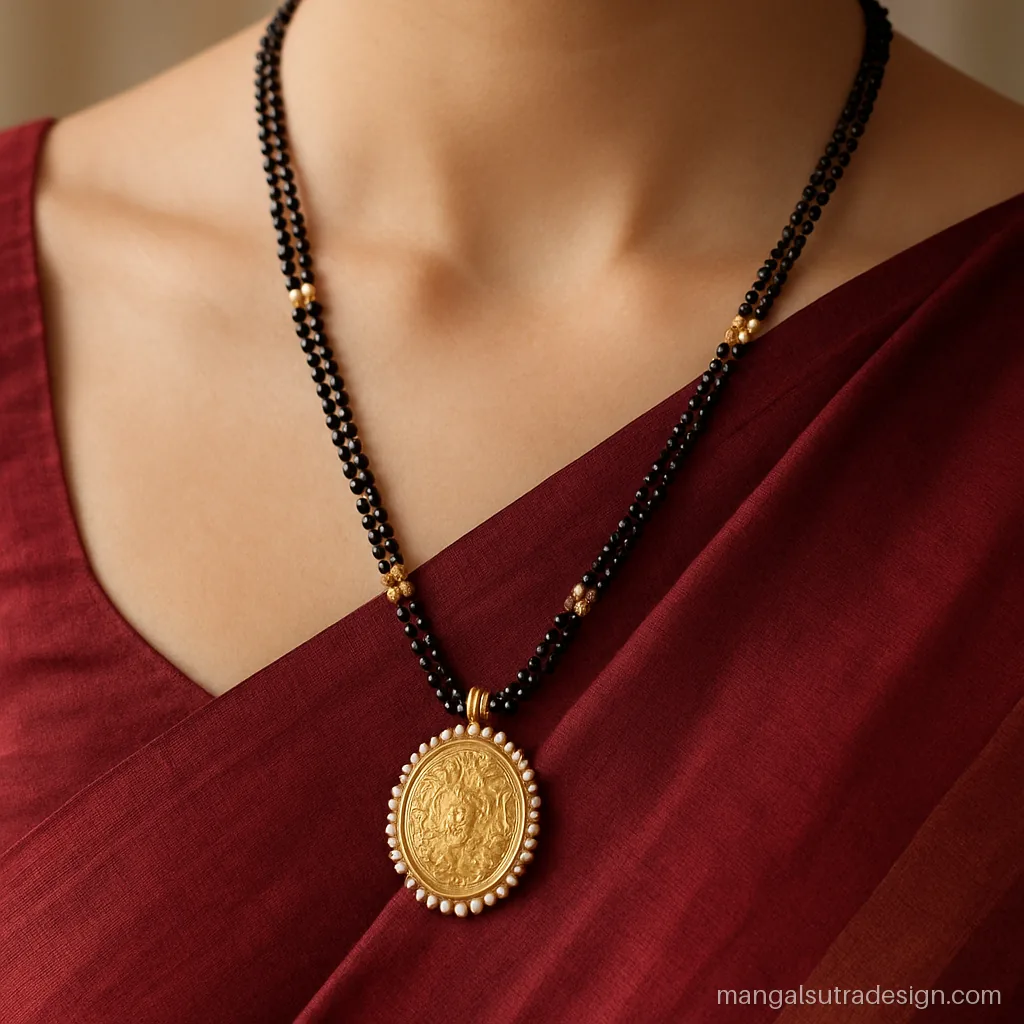
- Weight
- About 20 g
- Length
- Long, 28 in
- Wear
- Weddings
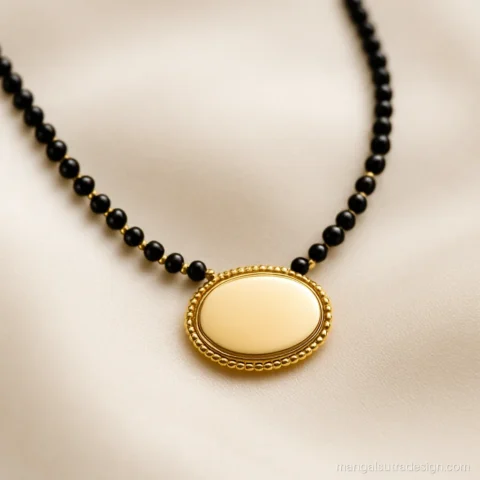
An oval pendant with a seed pearl edge on a long double strand looks graceful with sarees. A good choice if you want a heavier wedding look.
Ask your jeweller: Long strands carry more beads. Ask for strong coated wire and a hook clasp with a safety loop.
Modern Traditional Gold Hindu Mangalsutra Design
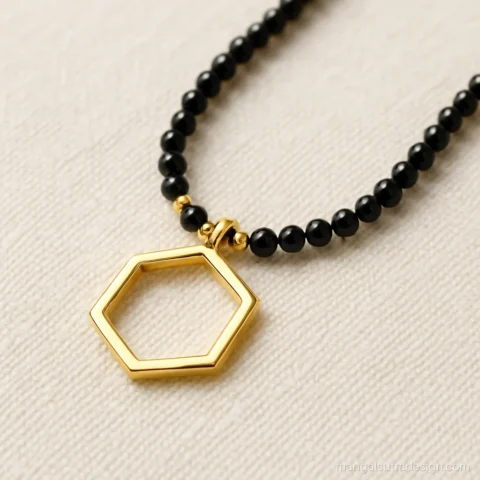
These pieces keep vati, coin or temple roots but trim the size and weight. They suit women who want a traditional feel they can wear every day. See more simple shapes on modern mangalsutra design.
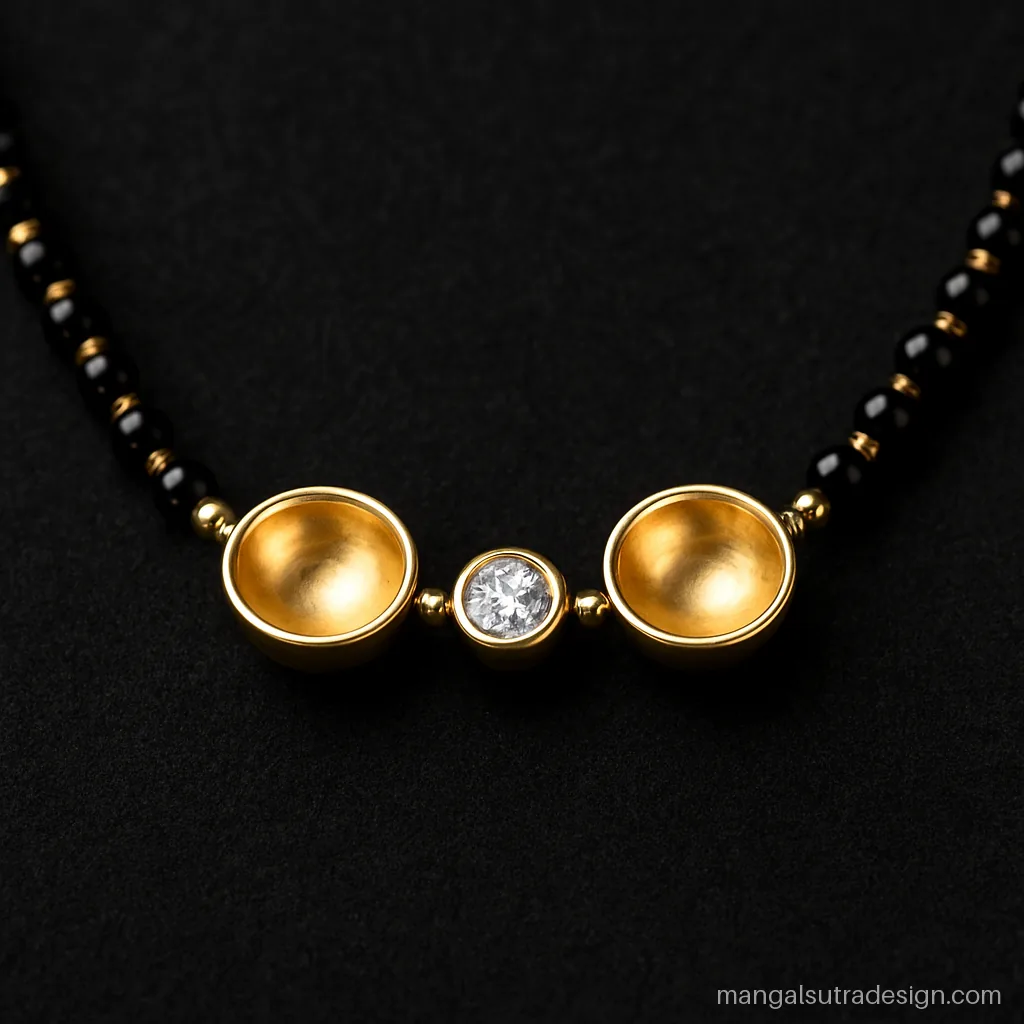
- Weight
- About 5 g
- Length
- Short, 18 in
- Wear
- Daily modern wear
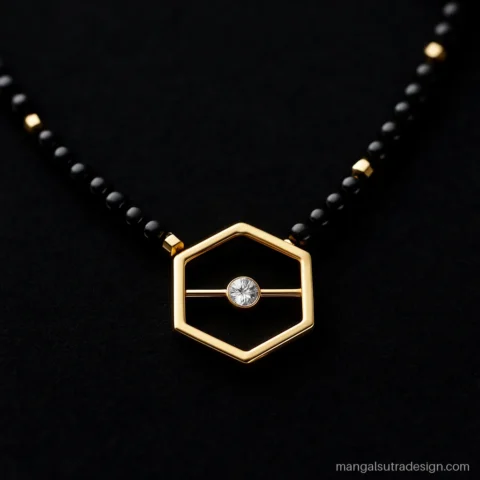
Tiny vati cups with one diamond between them keep the classic idea in a lighter, modern size. Good for office and college reunions alike.
Ask your jeweller: Mix of 22k cups and a diamond can be made in 18k. Ask which karat and check the hallmark.
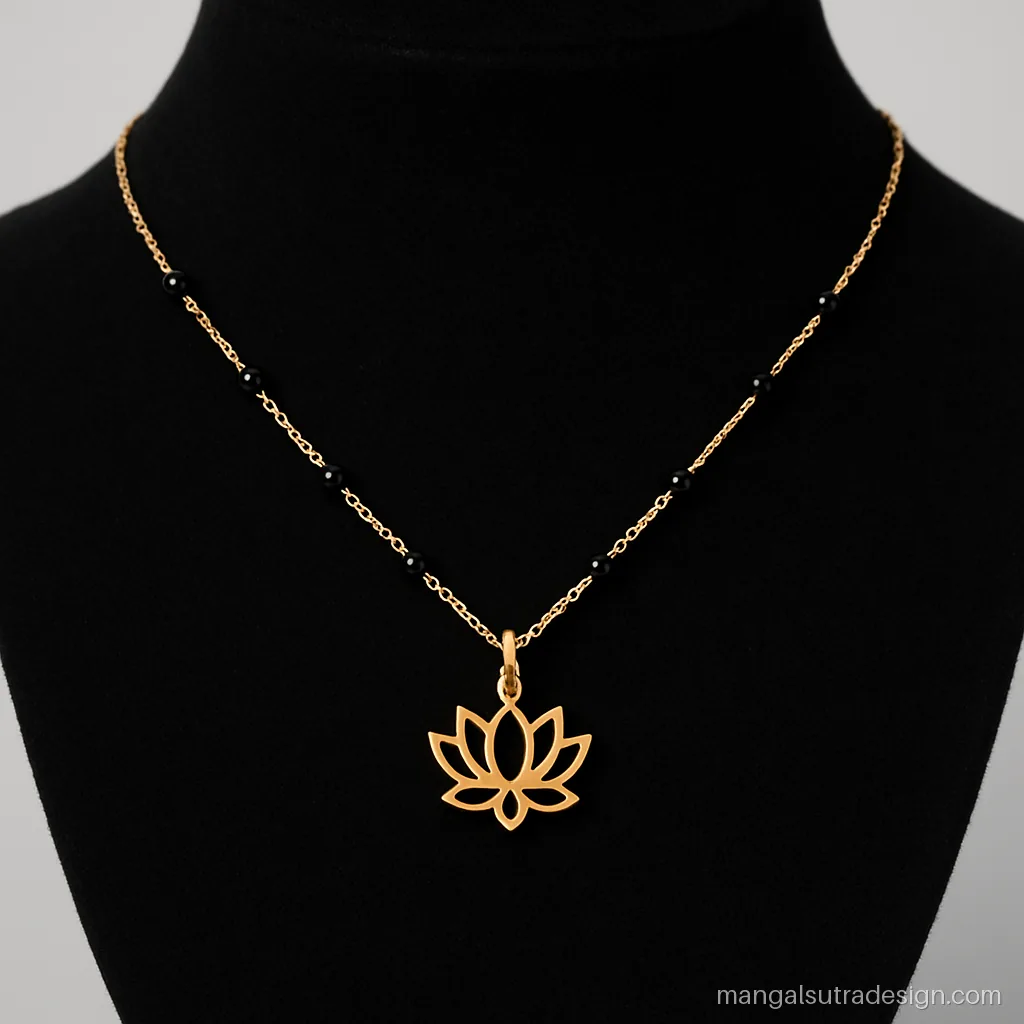
- Weight
- About 6 g
- Length
- Short, 18 in
- Wear
- Daily and pujas
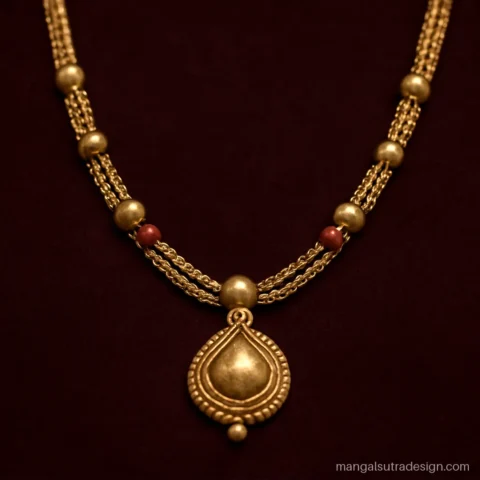
A flat lotus on a fine gold chain is a lighter take on a temple pendant. The bead stations keep the look rooted in tradition.
Ask your jeweller: Ask for a lotus with a smooth back so it does not catch on blouse fabric.
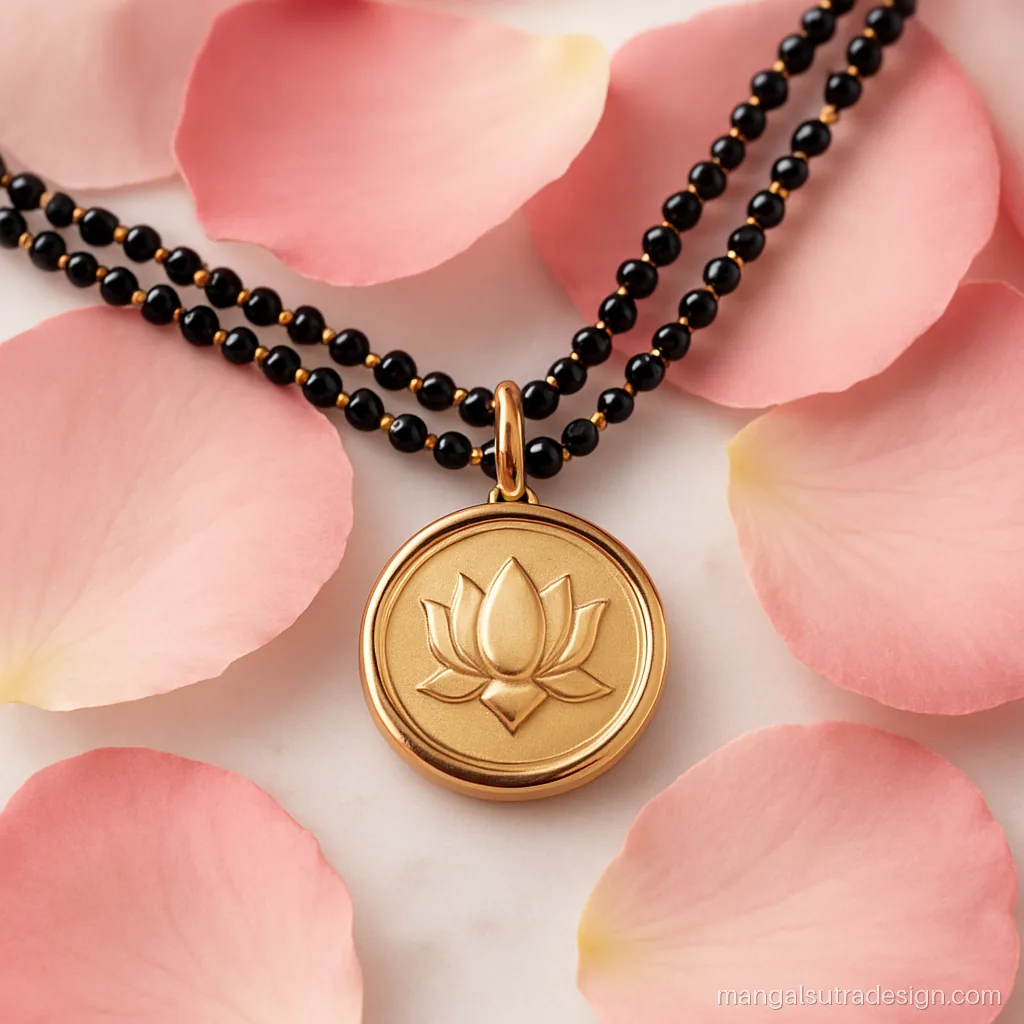
- Weight
- About 6 g
- Length
- Short, 17 in
- Wear
- Kurtis and sarees
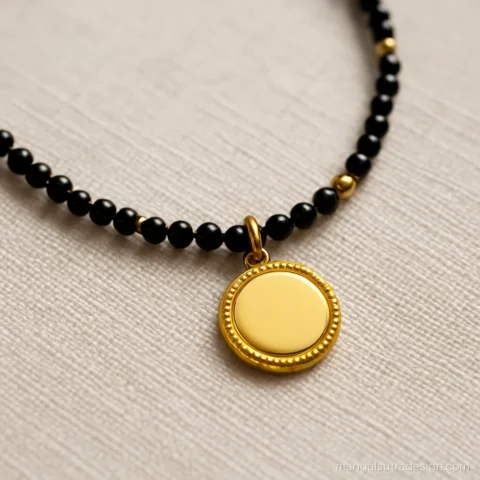
A small embossed coin in yellow gold with a rose gold border gives an old motif a new colour. Easy to style with both sarees and kurtis.
Ask your jeweller: Two tone work is usually 18k. Ask for the hallmark and check the colour join is even.
How to Pick a Traditional Mangalsutra
Start with your family's custom. In many Maharashtrian families the double vati is common, many Gujarati and North Indian families prefer a pendant on a bead strand, and in much of the south the thali on a chain is used. These are traditions, not rules, and many families are happy with a mix.
| Style | Usual weight | Usual length |
|---|---|---|
| Plain double vati | 8 to 12 g | 20 to 22 in |
| Coin or gold bead mala | 10 to 16 g | 22 to 24 in |
| Temple pendant | 15 to 25 g | 24 to 28 in |
| Light modern traditional | 4 to 7 g | 17 to 18 in |
A heavier piece costs more mainly because of gold weight, and handwork like filigree adds to making charges. Work out the bill with our mangalsutra price guide.
What to Check and How to Care
- Hallmark: BIS mark, 22K916 and a 6-digit HUID on the pendant or hook.
- Vati and coins: press gently. Thin hollow cups dent. Solid or thicker sheet lasts longer.
- Strand: long double strands need coated wire, not cotton thread, unless your family prefers a thread for custom.
- Antique finish: clean with a dry soft cloth only. Strong polish removes the dark tone.
- Storage: lay the piece flat in a soft pouch so cups and coins do not rub.
Want something heavier for the wedding? See heavy mangalsutra design.
Mangalsutra questions answered
What is a traditional mangalsutra?
It is the black bead and gold necklace worn by many married Hindu women, made in the styles of a region, such as vati cups, gold bead malas or a thali on a chain. Shapes and customs vary from family to family.
Does a mangalsutra traditional style have to be heavy?
No. Many traditional designs come in 5 to 8 g versions with mini vati or small coins. Heavier pieces are often worn for the wedding and festivals, with a lighter one for daily use.
Which karat is best for a traditional gold mangalsutra?
22k is the usual choice for plain gold vati, coins and temple pendants. If the design has diamonds, 18k holds the stones better.
Can I wear traditional mangalsutra designs every day?
Yes, if you choose a lighter piece with a strong strand. Keep heavy temple pendants for occasions so they do not wear out fast.
Can a traditional mangalsutra be remade into a modern one?
Yes. Many jewellers can melt or exchange an old piece for a new design at the day's rate, minus a small deduction. Ask for the exchange value in writing before you agree.