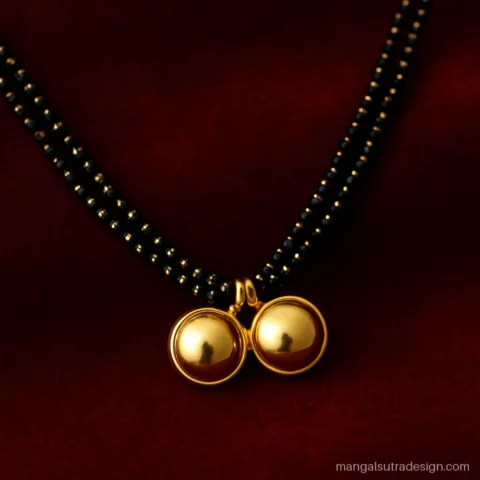
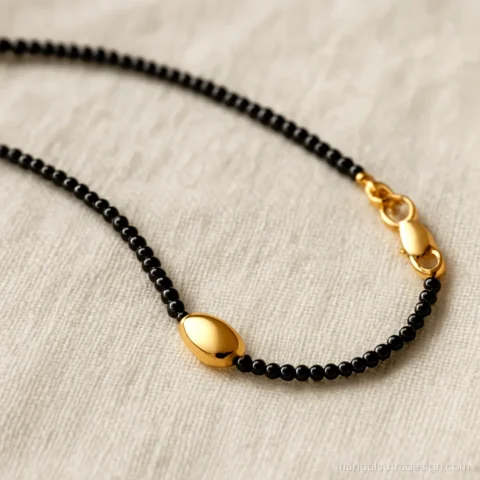
Mangalsutra Meaning: What It Is, Regional Names and How to Choose
- 8 designs
- Guides
- Updated Oct 2026
The mangalsutra meaning is simple: it is the thread of good wishes that many married Hindu women wear around the neck. The word joins two Sanskrit words, mangal (auspicious, good) and sutra (thread). So the mangalsutra meaning in English is close to "auspicious thread" or "sacred thread of marriage".
For many families it is more than jewellery. It carries memories of the wedding day, of the people who tied it and blessed it. Still, how it looks, what it is called and how it is worn all change from region to region and from family to family. There is no single correct way.
This guide explains the word, the common beliefs, the regional names, when it is usually tied, and how to choose and care for one. When you are ready to look at designs, see our traditional mangalsutra designs or the full mangalsutra design gallery.
Mangalsutra Meaning Across India: One Idea, Many Forms
The meaning stays close everywhere, but the shape changes from region to region. These four pieces show how the same idea looks in different homes.
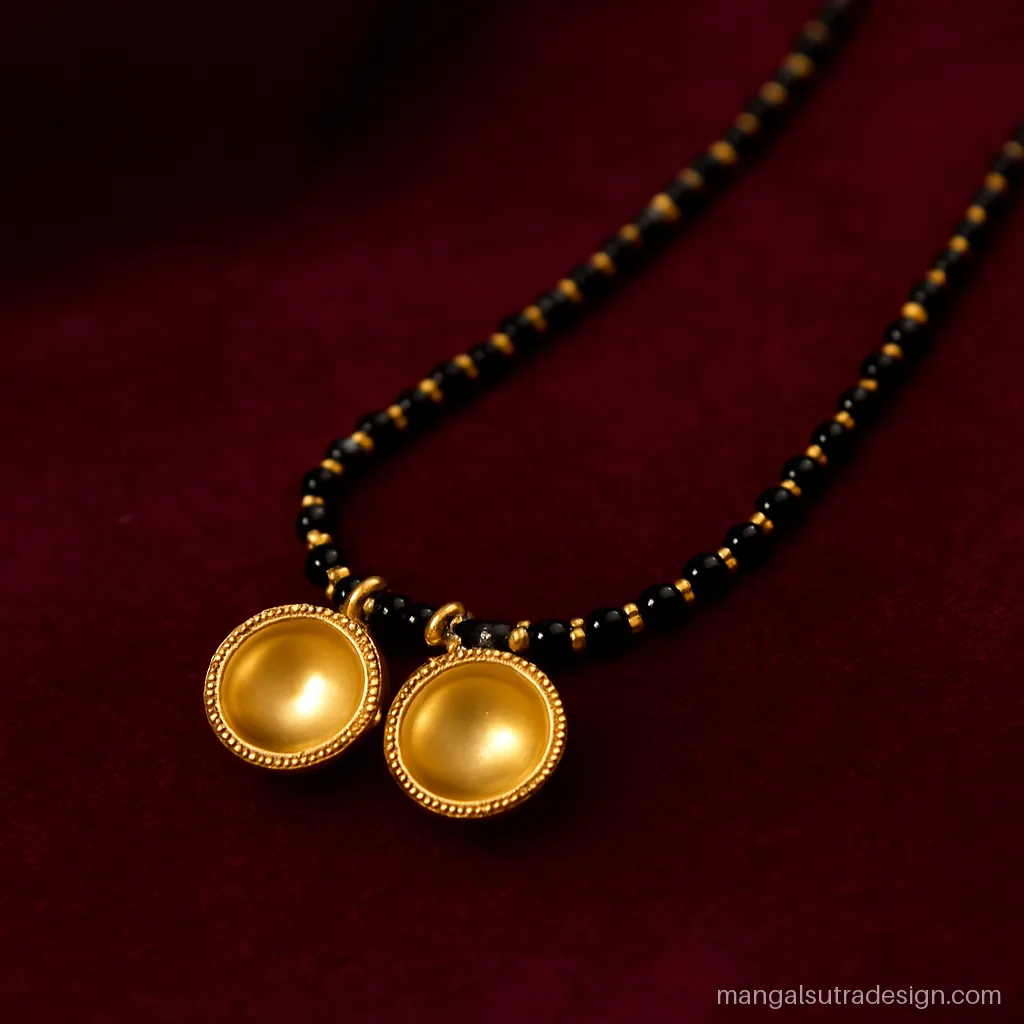
- Weight
- About 12 g
- Length
- Long, 24 in
- Wear
- Wedding and festivals
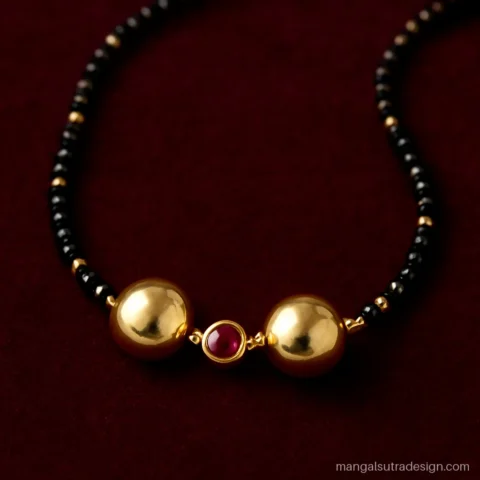
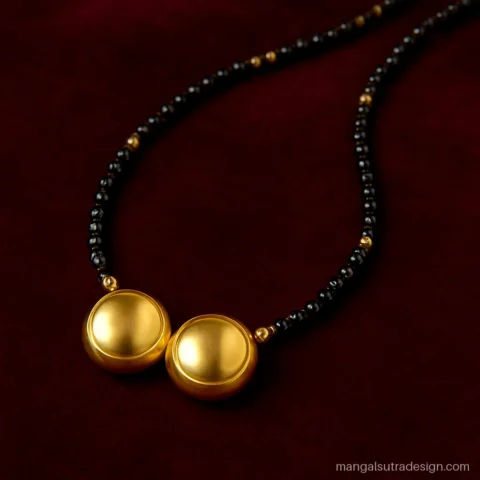
Two small gold cups sit side by side on two rows of black beads. Many Maharashtrian families see this as the classic form.
Ask your jeweller: Ask for 22k vati with a BIS hallmark and HUID, and check the strand is on nylon-coated wire.
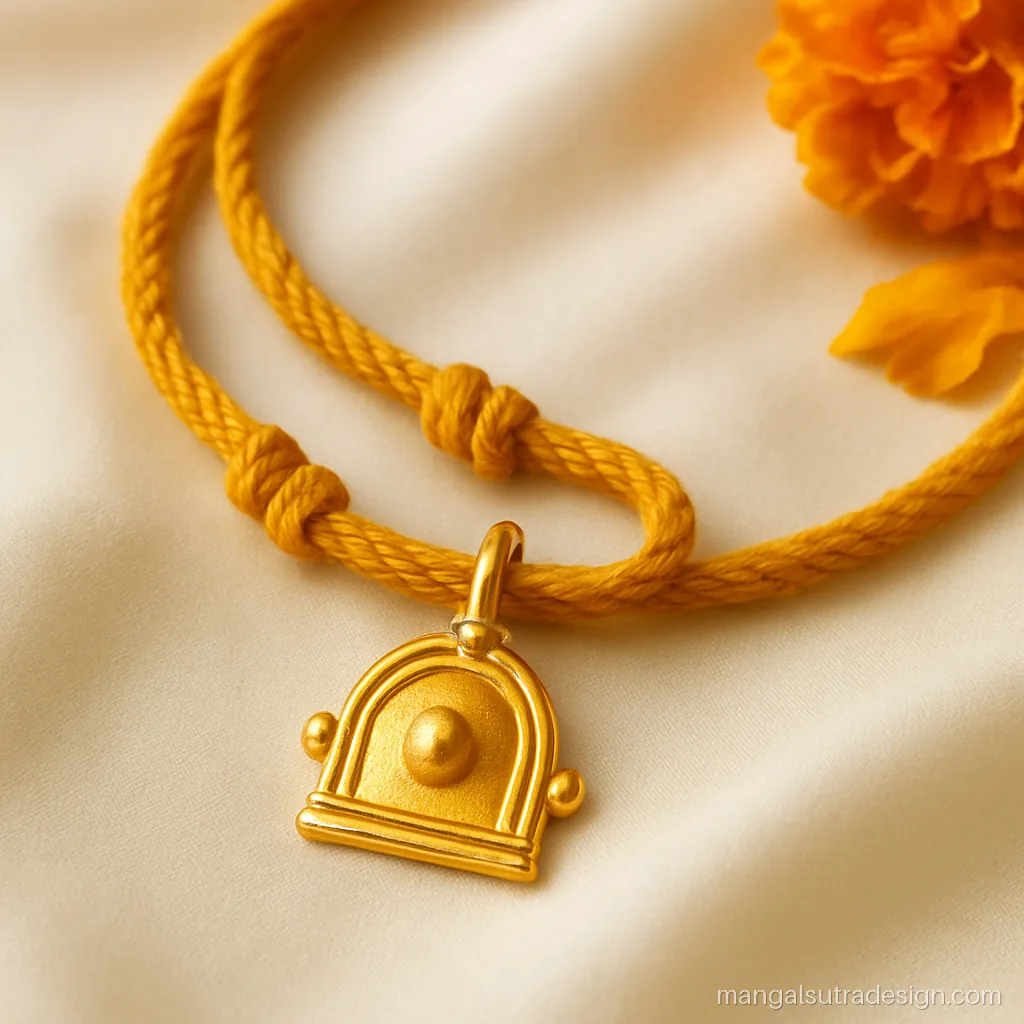
- Weight
- About 8 g pendant
- Length
- Thread, 22 in
- Wear
- Wedding ceremony
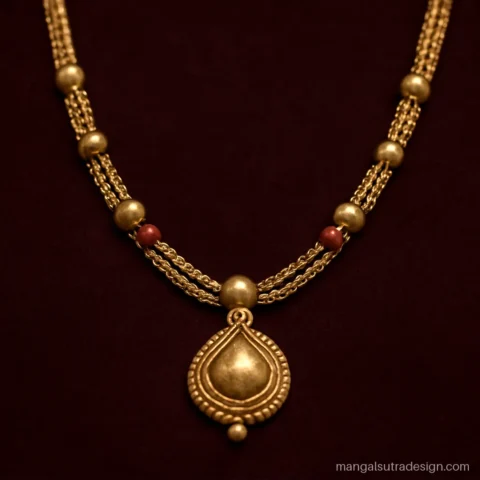
A gold thali on a turmeric thread, as many Tamil families use on the wedding day. Later it may move to a gold chain.
Ask your jeweller: Thali designs differ by community. Show the jeweller a family photo so the shape matches your tradition.
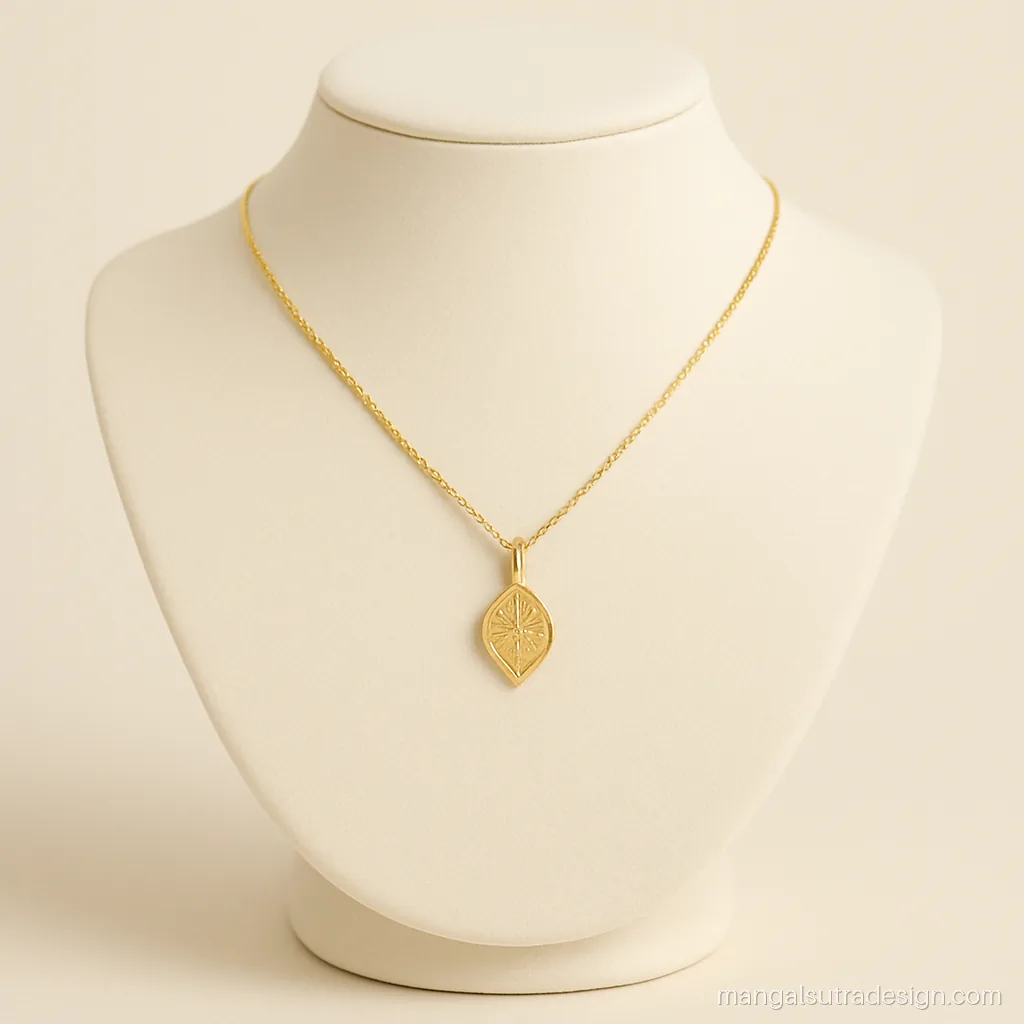
- Weight
- About 5 g
- Length
- Short, 18 in
- Wear
- Daily wear
A small leaf shaped pendant on a plain chain, close to the minnu many Kerala families know. Light and easy for daily wear.
Ask your jeweller: Ask for a 22k chain with a lobster clasp, not a spring ring, so it stays shut during work.
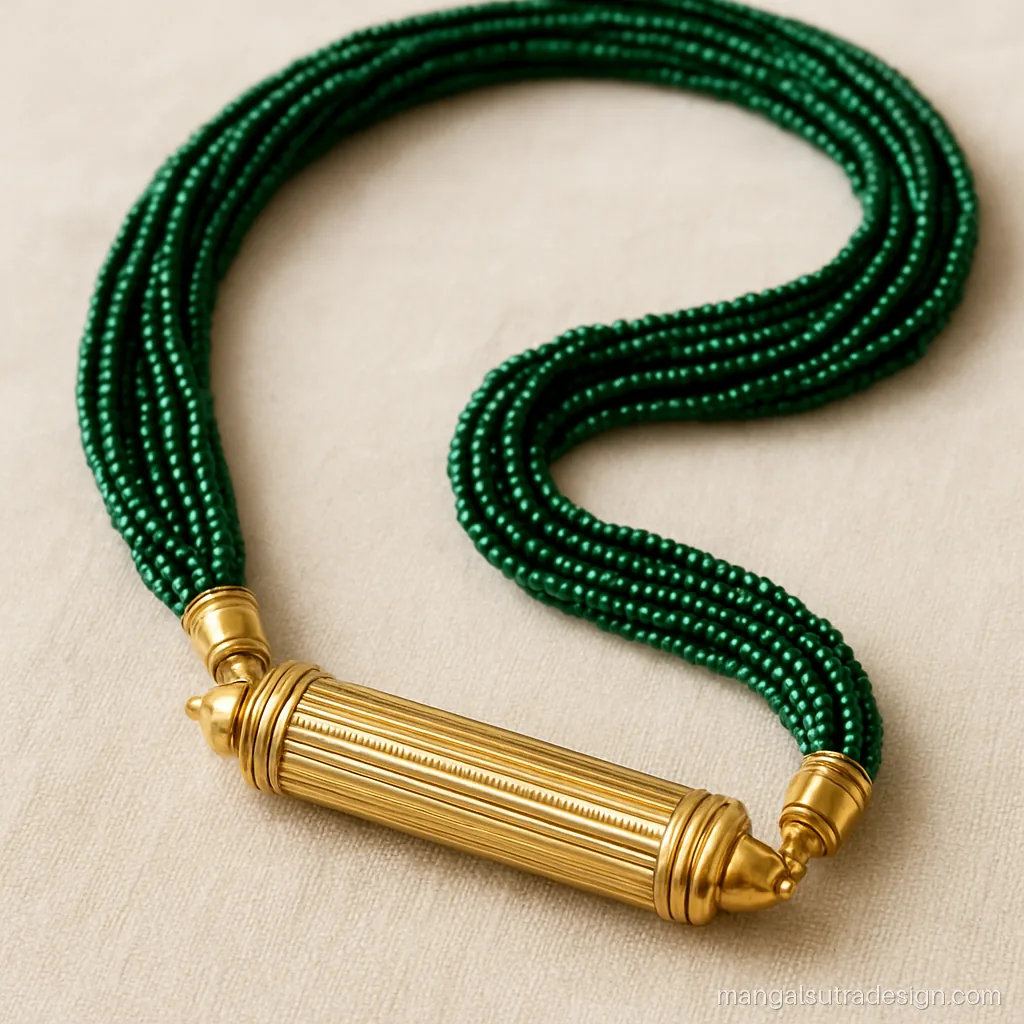
- Weight
- About 15 g gold
- Length
- Long, 26 in
- Wear
- Teej and festivals
A long gold tilhari on bunched green glass beads, the style many Nepali families wear. It is bold and stays a festival favourite.
Ask your jeweller: Check the tilhari is hollow or solid, since this changes weight a lot. Ask for tight bead crimps.
Mangalsutra in English Terms: Wearing, Checking and Caring
A mangalsutra is worn for years, so a few simple checks at the shop and at home keep it strong. These pictures show what to look at.
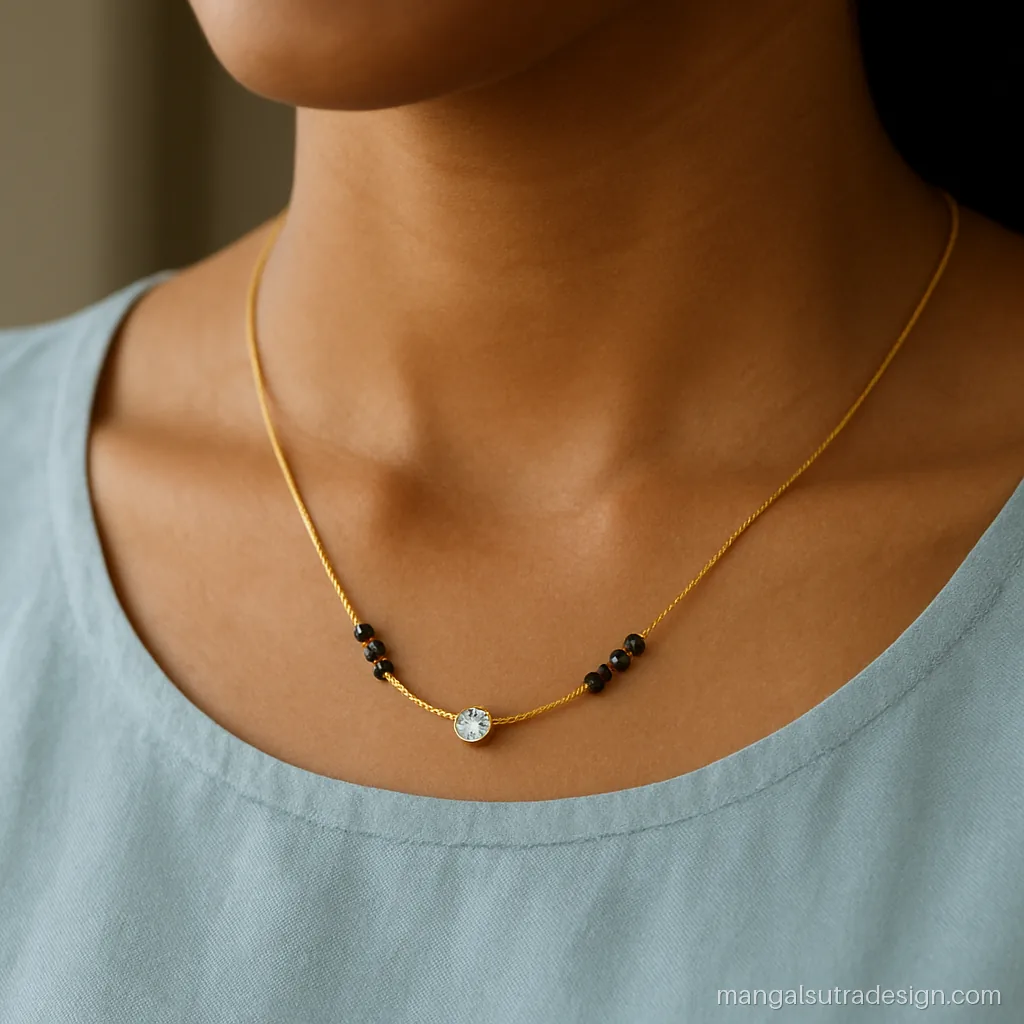
- Weight
- About 4 g
- Length
- Short, 17 in
- Wear
- Office and daily wear
A short chain with black beads and one small diamond suits office days and simple kurtis. It does not catch on dupattas.
Ask your jeweller: For the diamond setting ask for 18k gold, which holds prongs firmly. Check the hallmark shows 18k and HUID.
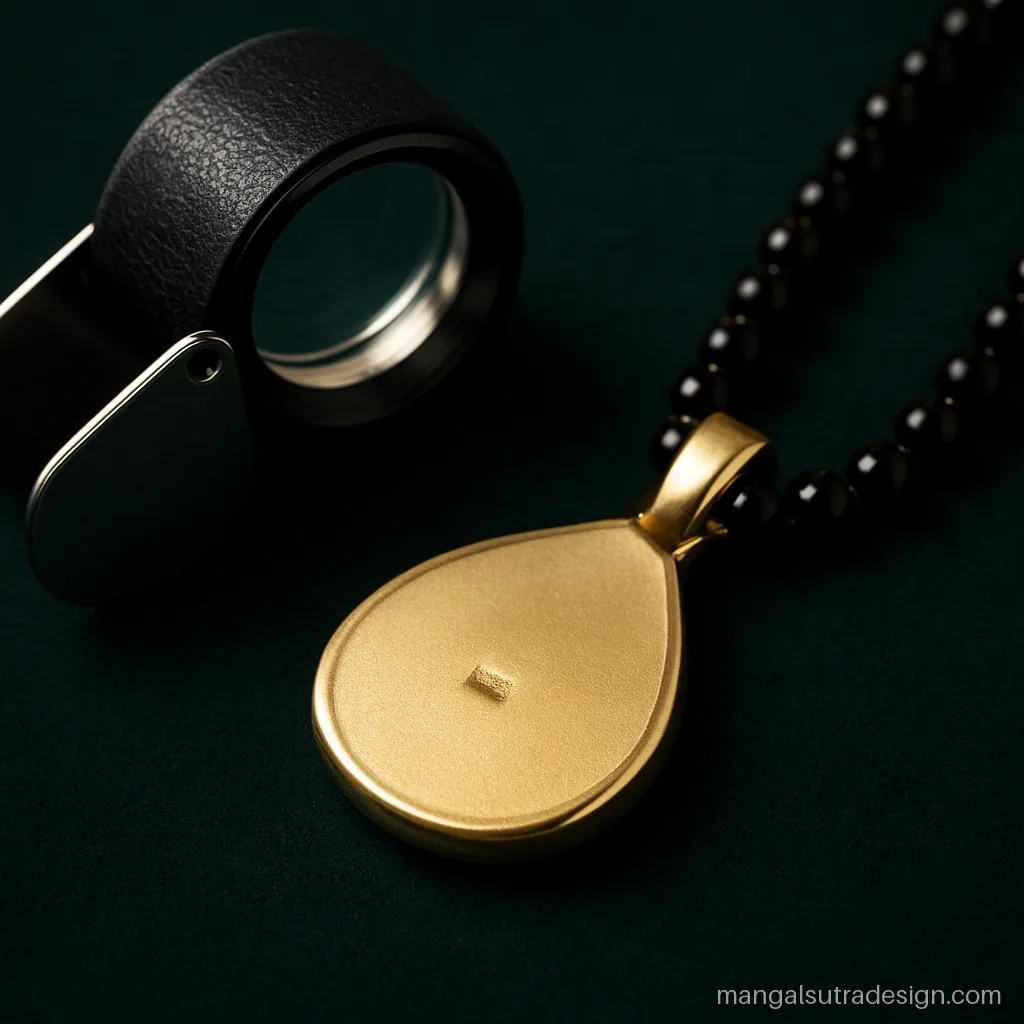
- Weight
- Any weight
- Length
- Not applicable
- Wear
- Buying check
This is how you check the stamp on the back of a pendant. The marks are tiny, so a loupe or phone zoom helps.
Ask your jeweller: Look for the BIS mark, karat such as 22K916, and a 6 character HUID. Verify the HUID on the BIS Care app.
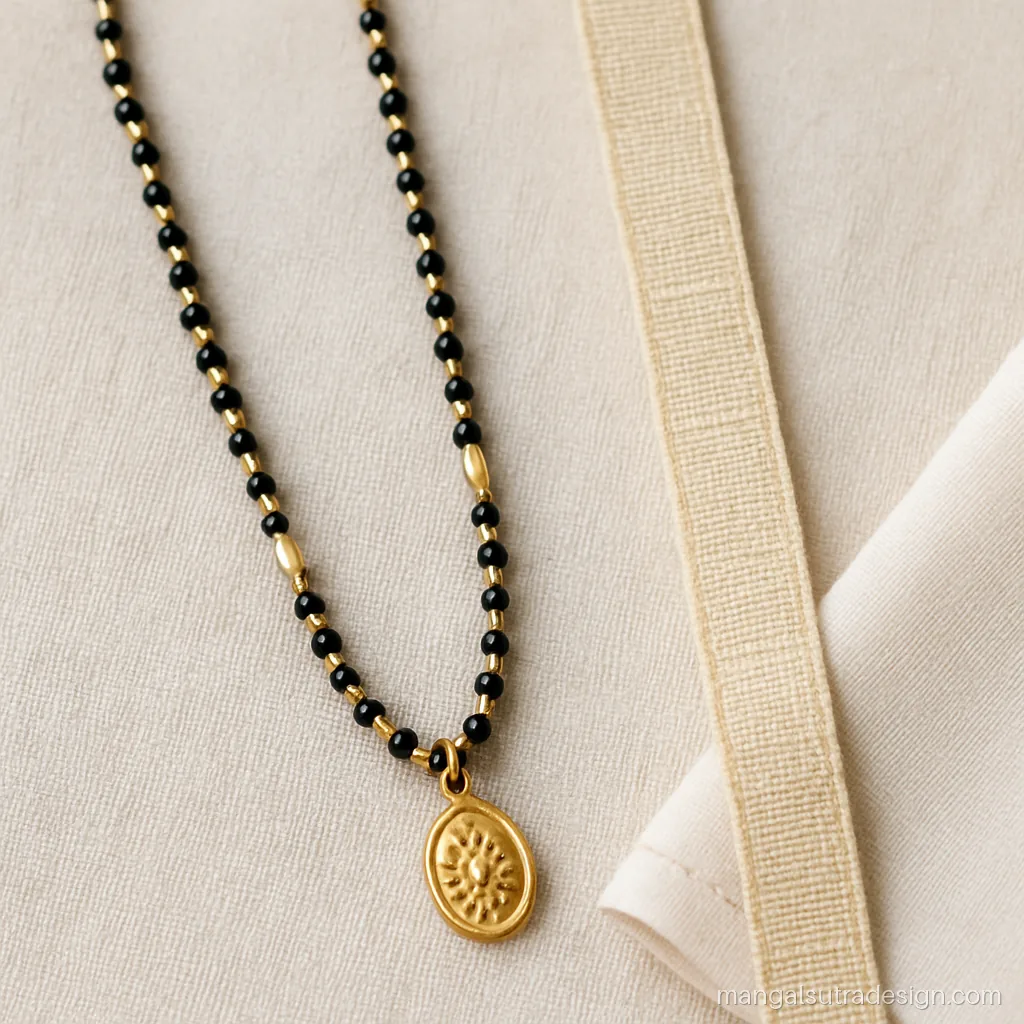
- Weight
- About 7 g
- Length
- Medium, 20 in
- Wear
- Choosing length
Measure an old chain you like before going to the shop. Length in inches is the easiest way to explain what you want.
Ask your jeweller: Tell the jeweller the length in inches and ask if they can add an extension ring for later.
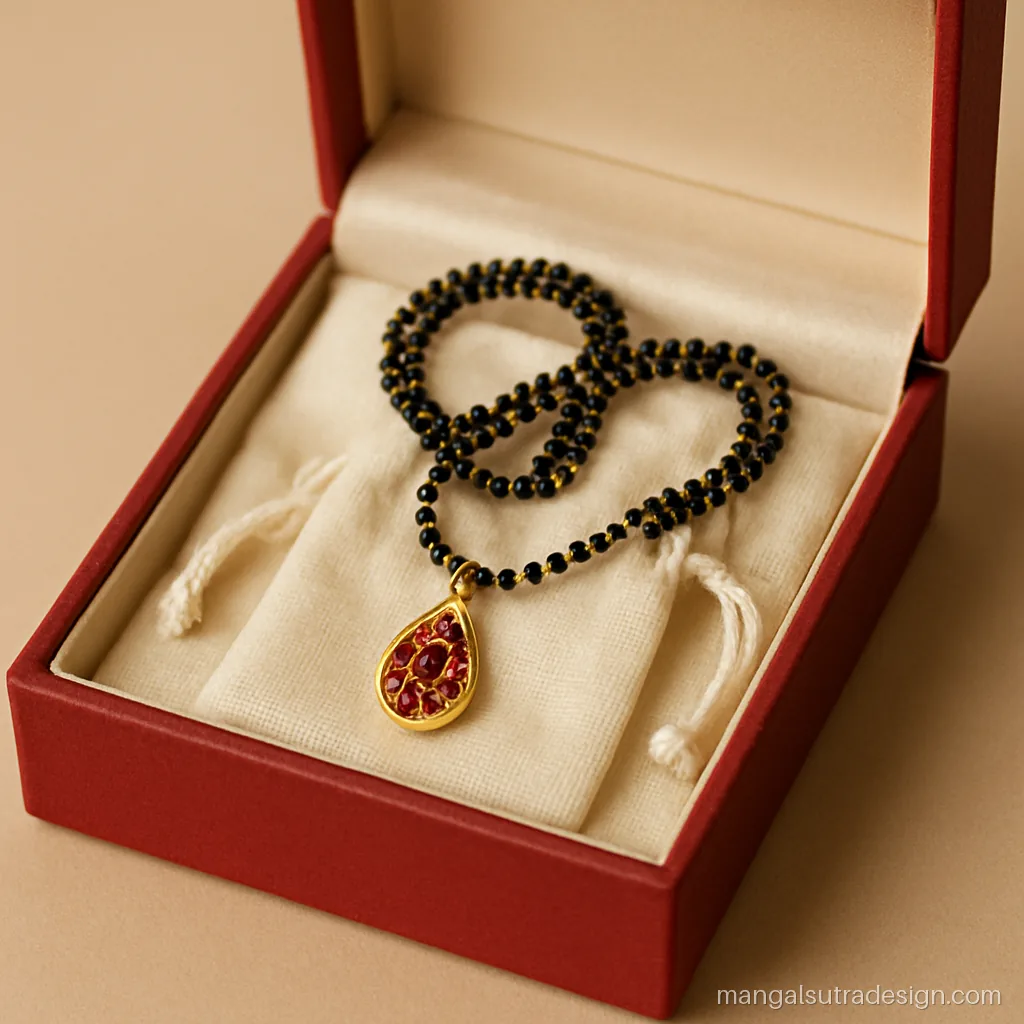
- Weight
- About 9 g
- Length
- Medium, 22 in
- Wear
- Storage and care
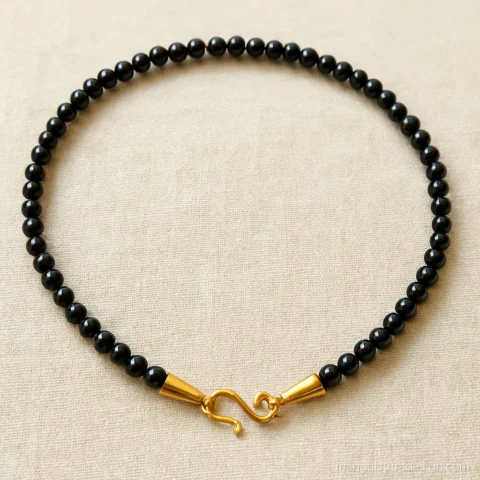
Keep it in its own soft pouch, laid flat. This stops the black beads from rubbing on other gold pieces.
Ask your jeweller: Ask the jeweller for a free yearly check of the strand wire and clasp. Many shops will restring at cost.
What Does Mangalsutra Mean? The Word and the Belief
If you want the mangalsutra in English, there is no exact single word. "Marriage necklace" is the closest everyday phrase. "Auspicious thread" is the word-for-word meaning.
In many Hindu communities, the mangalsutra is seen as a sign that a woman is married. Many families believe it carries wishes for a long, happy married life and for the well-being of the husband and the home. These are beliefs held with love, and they differ from home to home. Some women wear it every day of their life. Others wear it only for poojas, functions and festivals. Some families do not use it at all and follow other customs, such as bangles or toe rings.
In older times the mangalsutra was often just a yellow cotton thread, sometimes rubbed with turmeric, with a small gold piece on it. Over time many families moved to black beads and gold. Today you will see everything from a thin chain with one small diamond to a long, heavy two-strand piece.
Regional Names: Thali, Mangalya, Minnu, Tilhari and More
The same idea goes by many names. Here are the ones buyers ask about most. Usage varies inside each state too, so treat this as a rough map, not a rule.
| Name | Where it is commonly used | Common look |
|---|---|---|
| Mangalsutra | Maharashtra, Gujarat, North and Central India | Black beads with a gold pendant or two vati |
| Thali / Thaali | Tamil Nadu and parts of Kerala | Gold pendant on a yellow thread or gold chain |
| Mangalya / Mangalyam | Karnataka, Andhra Pradesh, Telangana, Tamil Nadu | Gold discs or pendant on a chain or thread |
| Pustelu | Telugu speaking families | Two small gold discs, one from each side of the family |
| Minnu | Kerala, especially many Christian families | Small leaf or heart shaped pendant |
| Tilhari | Nepal and some hill communities | Long gold cylinder on green or red glass beads |
| Karimani | Karnataka | Black bead strands with gold |
You can see regional pieces in more detail on our Maharashtrian mangalsutra, South Indian mangalsutra and Nepali and pahadi mangalsutra pages.
When Is the Mangalsutra Tied?
In most Hindu weddings that use it, the groom ties the mangalsutra around the bride's neck during the wedding rituals. The exact moment changes by community.
- In many North Indian and Gujarati weddings, it is tied near the end of the ceremony, often around the time sindoor is applied.
- In many Maharashtrian weddings, it is tied after the main rituals, and family elders bless the couple.
- In many South Indian weddings, tying the thali or mangalya is the central moment, often with three knots, while family and guests shower rice and flowers.
- In some South Indian families, the thali on its yellow thread is later moved to a gold chain in a small family function.
The mother-in-law or the groom's family often gifts it, but in some families the bride's side does. If you are buying it as a gift, ask the family first which style they follow. A short talk saves a trip back to the jeweller.
How to Choose a Mangalsutra and Read the Price
Start with how often she will wear it. A piece for daily wear should be light, short and smooth so it does not catch on clothes. A wedding piece can be longer and heavier.
- Length: 16 to 18 inches sits on the collarbone and suits kurtis and office wear. 20 to 24 inches suits sarees. 26 inches and above is a traditional long style.
- Karat: 22k (91.6 percent gold) is the usual choice for plain gold. For diamond settings, 18k (75 percent gold) is harder and holds stones better.
- Hallmark: Every gold piece sold by a jeweller in India must have the BIS hallmark with a 6 character HUID. Ask to see it and check it on the BIS Care app.
- Strand: Ask what the beads are strung on. Nylon-coated steel wire lasts longer than plain thread.
- Clasp: A hook or lobster clasp is safer than a spring ring for daily wear.
Price is worked out with a simple formula: gold weight x that day's rate for the karat, plus making charges (a percentage or a fixed amount per gram), plus 3 percent GST. Diamonds and stones are charged separately. Gold rates change every day, so ask for a written break-up. Our mangalsutra price guide walks through it step by step. Also note that "1 gram gold" jewellery in many shops is gold-plated, not one gram of solid gold.
Daily Wear and Care Tips
- Take it off before swimming, heavy cleaning or using hair dye. Chlorine and chemicals dull gold and weaken thread.
- Put on perfume and lotion first, then the mangalsutra.
- Clean gold parts with mild soap water and a soft toothbrush. Dry with a cotton cloth. Do not soak the bead strand for long.
- Store it alone in a soft pouch so the beads do not rub against other gold.
- Once a year, show it to your jeweller. A loose wire or a worn clasp is cheap to fix and costly to lose.
- If some women in your family do not remove it at all, a lighter piece with a strong clasp is the most practical. See daily wear mangalsutra designs for ideas.
Mangalsutra questions answered
What is the mangalsutra meaning in English?
Mangalsutra means auspicious thread. It comes from mangal (auspicious) and sutra (thread). In everyday English people call it a marriage necklace.
What is mangalsutra in English called?
There is no exact English word. Marriage necklace or sacred wedding necklace are the most common ways to describe it. Many people simply use the word mangalsutra in English too.
Is it necessary to wear a mangalsutra every day?
This depends on your family and your own choice. Some women wear it every day, some only on special days, and some families do not use it at all. A light daily wear piece is a good middle path for many working women.
What is the difference between a thali and a mangalsutra?
Both carry the same idea of marriage. Thali is the word used in Tamil Nadu and parts of Kerala, and the design is usually a gold pendant on a yellow thread or gold chain. Mangalsutra is the word used in most other regions, often with black beads.
Which karat is best for a mangalsutra?
22k is the usual choice for plain gold designs. If the pendant has diamonds, 18k is stronger and holds the stones better. Always check the BIS hallmark and HUID.
Who usually buys the mangalsutra?
In many families the groom's side gifts it, but customs vary and in some homes the bride's family buys it. It is best to ask both families before the wedding shopping starts.